This blog has been temporarily on hold during the creation of a new website, which is still under construction. Please pay it a visit at:
Hilliard & Croft
The Original "Getting Real"

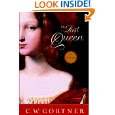
Please click on the picture to order this book.
Friday, 29 July 2011


Friday, 15 July 2011
Shattered Crowns: The Scapegoats

The first novel in my trilogy, Shattered Crowns, is now available on Kindle and will soon be available in paperback. The trilogy follows the royalties of Europe from 1913 to 1918 and the first novel (1913 to the outbreak of the First World War) has the subtitle The Scapegoats. I chose this title because, after ploughing through so many opposing opinions and documents, and from thinking of the characters involved it is clear that Tsar Nicholas, Kaiser Wilhelm and, to a lesser extent, Emperor Franz Josef have been made the scapegoats for such a terrible war whereas not one of them – not even the Kaiser! – wanted war.
It is particularly striking, seeing how they were – against their will - hoodwinked, cajoled and pressurised by ministers and others into allowing the war to happen, that these three monarchies were destroyed by the war. It is so striking that it seems almost a deliberate plot to overthrow them, particularly when you consider that both Russia and Germany refused to be drawn into the international banking legislation of the time and were fiercely independent. I firmly believe that – after years of trying to make sense of how this terrible war came about – the real cause lies very deeply hidden in something far more sinister that can easily be described here.
I am, however, far more interested in interesting people than in politics and one of the most interesting revelations to me during my research is the character of Archduke Franz Ferdinand. This man, whom most people remember only because his murder is said to be the cause of WW1, was a far greater and more perceptive man than the hot-headed, unpopular person he is usually shown to be. His ideas for future government of Austria-Hungary (based on the American idea of independent states and a federal government); his determination to refuse to be crowned King of Hungary until universal suffrage was granted; his understanding of the balance of power and his opposition to the annexing of Bosnia-Herzegovina, are quite wonderful!
Interesting, isn’t it, that he was invited to Sarajevo on his wedding anniversary

and Sophie, his beloved wife who had been so shunned in Vienna was also invited to appear with him in public that day? Did someone fail to mention that it was also a day of great national symbolism for the Serbs (St. Vitus Day – the anniversary of the Battle of Kosovo). Strange how, in such a turbulent area, there was no military protection...even stranger how, after the first attempt on his life, he was still driven in an open car through the streets and the car took a wrong turning - because the driver hadn’t been informed of the change of route to the hospital – and so had to reverse into the path of the killer. Strange too that we accept that the Black Hand was a recognised criminal organisation who had carried out many atrocities when, in fact, apart from a couple of so-called failed or aborted assassination attempts, I cannot find any evidence of their supposed crimes. Also, if that group was – as Austrian ministers claimed – made up of military officers and high ranking Serbian officials, would they choose some drop-out nineteen year old student to carry out so important an assassination? There is a great deal more to say of this but perhaps it is inappropriate here.
To the end of her life, Empress Zita maintained that there was something far more
sinister about the plot to kill Franz Ferdinand than meets the eye. In the aftermath of war, Franz Ferdinand has largely been forgotten; Kaiser Wilhelm (who was always a bit unbalanced) has been made out to be the mad and evil plotter - though he was tryng desperately - in the midst of his many hang-ups - to avoid war and he vehemently opposed the invasion of Belgium; and Tsar Nicholas (who was way ahead of many others in his understanding of and attempts to bring a peaceful solution to the
Balkans wars, and who worked often through the night with no rest in his attempts to broker peace) is portrayed as dancing on the deck of his yacht letting the world go to hell in a handcart because he was ‘weak’. Amazing how easily often repeated stories begin to be believed.
"Shattered Crowns: The Scapegoats" isn’t an attempt to change perceived history or anything of the sort, but is rather written out of love and respect for these ‘scapegoats’ of history.
Saturday, 28 May 2011
Fact or Fiction?
If you were asked to write your autobiography, where would you begin? "I was born...I did this, I did that...I went to school, college, university....met so & so etc. etc."? Or would you write: "The first thing I felt was...." or "I hurt..." or "I was happy...."? Which would be closer to your essence and to who you really are? Which would be more real?If you were asked to write someone else's biography, where would you begin? With the same questions? Or, because we feel such a sense of separation from each other, would you feel like Thomas Gradgrind in Dickens' Hard Times, when he says:
"Now, what I want is, Facts. Teach these boys and girls nothing but Facts. Facts alone are wanted in life. Plant nothing else, and root out everything else. You can only form the minds of reasoning animals upon Facts: nothing else will ever be of any service to them. This is the principle on which I bring up my own children, and this is the principle on which I bring up these children. Stick to Facts, sir!"
In a biography or factual account of any life, these things are necessary, otherwise real historical people become distorted projections of the writer. But how can I prove in my own life - how can you prove in yours - that you once felt humiliated, destroyed, elated, ecstatic? Do you have sources for that? Did you write it down? Did you make sure it was stored in archives? How did you feel when you first fell in love? Can you prove it? I can't. I have no sources for my heart's experiences...how much less anyone else's.However, there are times when (to quote Dickens again):
"Some persons hold," he pursued, still hesitating, "that there is a wisdom of the Head, and that there is a wisdom of the Heart. . . ."
Sometimes, reading the spoken words and letters of people of the past, one has such a feel for what that person is saying, that it goes beyond what can be proved or cited to sources. Any novel is a projection of the author but so, too, is any biography in that the author places some kind of interpretation on the 'facts'. It is my belief that if a novel is clearly labelled as a 'novel' the author's intention is clear - it is an interpretation of truth. That is no less valid than something that is labelled 'biography'. Perhaps, in some ways, the former is closer to truth than the latter because the former is patently the author's interpretation.
There are many ways to approach a person's life and none of them is as true as the person him/herself, but when it comes to presenting a life in any particular genre, I firmly believe that the bottom line is respect for the person. Many people have written from accurate sources and have written without love or empathy. Many people have written inaccuracies and novels, without love. Many more people have written with great feeling for their characters - faults, foibles and all. When one writes from the heart and the head, I honestly don't think it matters which genre one chooses.
I originally wrote this post as an explanation of why I had written the life of Grand Duchess Elizabeth of Russia as a novel. Having been working on a further trilogy of books based on the 'major players' of the First World War, I felt impelled to write this again. Some books do not easily fit into genres; most people do not fit into genres either...
"Now, what I want is, Facts. Teach these boys and girls nothing but Facts. Facts alone are wanted in life. Plant nothing else, and root out everything else. You can only form the minds of reasoning animals upon Facts: nothing else will ever be of any service to them. This is the principle on which I bring up my own children, and this is the principle on which I bring up these children. Stick to Facts, sir!"
In a biography or factual account of any life, these things are necessary, otherwise real historical people become distorted projections of the writer. But how can I prove in my own life - how can you prove in yours - that you once felt humiliated, destroyed, elated, ecstatic? Do you have sources for that? Did you write it down? Did you make sure it was stored in archives? How did you feel when you first fell in love? Can you prove it? I can't. I have no sources for my heart's experiences...how much less anyone else's.However, there are times when (to quote Dickens again):
"Some persons hold," he pursued, still hesitating, "that there is a wisdom of the Head, and that there is a wisdom of the Heart. . . ."
Sometimes, reading the spoken words and letters of people of the past, one has such a feel for what that person is saying, that it goes beyond what can be proved or cited to sources. Any novel is a projection of the author but so, too, is any biography in that the author places some kind of interpretation on the 'facts'. It is my belief that if a novel is clearly labelled as a 'novel' the author's intention is clear - it is an interpretation of truth. That is no less valid than something that is labelled 'biography'. Perhaps, in some ways, the former is closer to truth than the latter because the former is patently the author's interpretation.
There are many ways to approach a person's life and none of them is as true as the person him/herself, but when it comes to presenting a life in any particular genre, I firmly believe that the bottom line is respect for the person. Many people have written from accurate sources and have written without love or empathy. Many people have written inaccuracies and novels, without love. Many more people have written with great feeling for their characters - faults, foibles and all. When one writes from the heart and the head, I honestly don't think it matters which genre one chooses.
I originally wrote this post as an explanation of why I had written the life of Grand Duchess Elizabeth of Russia as a novel. Having been working on a further trilogy of books based on the 'major players' of the First World War, I felt impelled to write this again. Some books do not easily fit into genres; most people do not fit into genres either...
Friday, 7 January 2011
Whose Woods Are These
Robert Frost's poems are so simple and yet so lovely. Having seen the Temple Newsam woods in the snow today, these lovely lines came to mind:
Whose woods these are I think I know.
His house is in the village though;
He will not see me stopping here
To watch his woods fill up with snow.
My little horse must think it queer
To stop without a farmhouse near
Between the woods and frozen lake
The darkest evening of the year.
He gives his harness bells a shake
To ask if there is some mistake.
The only other sound’s the sweep
Of easy wind and downy flake.
The woods are lovely, dark and deep.
But I have promises to keep,
And miles to go before I sleep,
And miles to go before I sleep.
Whose woods these are I think I know.
His house is in the village though;
He will not see me stopping here
To watch his woods fill up with snow.
My little horse must think it queer
To stop without a farmhouse near
Between the woods and frozen lake
The darkest evening of the year.
He gives his harness bells a shake
To ask if there is some mistake.
The only other sound’s the sweep
Of easy wind and downy flake.
The woods are lovely, dark and deep.
But I have promises to keep,
And miles to go before I sleep,
And miles to go before I sleep.
Friday, 24 December 2010
Merry Christmas!

Thank you for visiting this blog throughout the year. A sincere wish from my heart that, wherever in the world you might be, your Christmas is filled with joy, peace and beauty!
Tuesday, 14 December 2010
"The Earth is the Bow"

The poet and saint, John of the Cross, whose feast day is 14th December, is probably best known for his intense 'Dark Night of the Soul' poems. This, however, I think is very beautiful and also quite appropriate for today which is also the anniversary of Prince Albert, Queen Victoria's Consort, and their daughter, Princess Alice, who was such a spiritual seeker and died (as did her father) so young....
You let
my sufferings cease,
for there was no one who could cure them.
Now let my eyes behold your face for you are our only love.
My spirit’s body is rising near – this earth a bow
that shot me;
now lift me into your arms as something precious
that you dropped.
My only suffering, from this day forth,
will be your divine
beauty,
and you will constantly cure my blessed sight each time
you bring your face so near to mine
and call me bride.
Do not be sad, my old friends; look,
these wings are finally stretched and laughing.
Our souls are rising near to you - this earth a bow that shot us;
now lift me into your arms, dear God,
like something precious that
you dropped.
Tuesday, 30 November 2010
Snow

It seems so short a time since we were shovelling snow in the interminable winter last year, and yet already, with no summer to speak of in between, here we are again. Nowadays snow is seen so often as nothing but a nuisance and yet, as Robert Bridges wonderful poem – London Snow - shows, in our clamour for ‘efficiency’ it’s easy to overlook the beauty of the season....
When men were all asleep the snow came flying,
In large white flakes falling on the city brown,
Stealthily and perpetually settling and loosely lying,
Hushing the latest traffic of the drowsy town;
Deadening, muffling, stifling its murmurs failing;
Lazily and incessantly floating down and down:
Silently sifting and veiling road, roof and railing;
Hiding difference, making unevenness even,
Into angles and crevices softly drifting and sailing.
All night it fell, and when full inches seven
It lay in the depth of its uncompacted lightness,
The clouds blew off from a high and frosty heaven;
And all woke earlier for the unaccustomed brightness
Of the winter dawning, the strange unheavenly glare:
The eye marvelled—marvelled at the dazzling whiteness;
The ear hearkened to the stillness of the solemn air;
No sound of wheel rumbling nor of foot falling,
And the busy morning cries came thin and spare.
Then boys I heard, as they went to school, calling,
They gathered up the crystal manna to freeze
Their tongues with tasting, their hands with snowballing;
Or rioted in a drift, plunging up to the knees;
Or peering up from under the white-mossed wonder,
‘O look at the trees!’ they cried, ‘O look at the trees!’
With lessened load a few carts creak and blunder,
Following along the white deserted way,
A country company long dispersed asunder:
When now already the sun, in pale display
Standing by Paul’s high dome, spread forth below
His sparkling beams, and awoke the stir of the day.
For now doors open, and war is waged with the snow;
And trains of sombre men, past tale of number,
Tread long brown paths, as toward their toil they go:
But even for them awhile no cares encumber
Their minds diverted; the daily word is unspoken,
The daily thoughts of labour and sorrow slumber
At the sight of the beauty that greets them, for the charm they have broken.
Subscribe to:
Posts (Atom)