This blog has now moved to be incorporated into:
Grand Duchess Elizabeth & Other Stories
Please visit us there, and at our website:
Hilliard and Croft Website
The Original "Getting Real"

Please click on the picture to order this book.
Sunday, 28 August 2011


Wednesday, 17 August 2011
Summoned By Bells
Few poets have ever managed to capture an era as John Betjeman did. His 'Summoned by Bells' is a long autobiographical poem in which he speaks with such sincerity and such an eye for the details of life in Edwardian England. Here is a beautiful video - in which he reads his poem as he wanders around places of his childhood haunts - interlaced with original film footage and music of the era.
Tuesday, 16 August 2011

Friday, 29 July 2011
Our new site
This blog has been temporarily on hold during the creation of a new website, which is still under construction. Please pay it a visit at:
Hilliard & Croft
Hilliard & Croft
Friday, 15 July 2011
Shattered Crowns: The Scapegoats

The first novel in my trilogy, Shattered Crowns, is now available on Kindle and will soon be available in paperback. The trilogy follows the royalties of Europe from 1913 to 1918 and the first novel (1913 to the outbreak of the First World War) has the subtitle The Scapegoats. I chose this title because, after ploughing through so many opposing opinions and documents, and from thinking of the characters involved it is clear that Tsar Nicholas, Kaiser Wilhelm and, to a lesser extent, Emperor Franz Josef have been made the scapegoats for such a terrible war whereas not one of them – not even the Kaiser! – wanted war.
It is particularly striking, seeing how they were – against their will - hoodwinked, cajoled and pressurised by ministers and others into allowing the war to happen, that these three monarchies were destroyed by the war. It is so striking that it seems almost a deliberate plot to overthrow them, particularly when you consider that both Russia and Germany refused to be drawn into the international banking legislation of the time and were fiercely independent. I firmly believe that – after years of trying to make sense of how this terrible war came about – the real cause lies very deeply hidden in something far more sinister that can easily be described here.
I am, however, far more interested in interesting people than in politics and one of the most interesting revelations to me during my research is the character of Archduke Franz Ferdinand. This man, whom most people remember only because his murder is said to be the cause of WW1, was a far greater and more perceptive man than the hot-headed, unpopular person he is usually shown to be. His ideas for future government of Austria-Hungary (based on the American idea of independent states and a federal government); his determination to refuse to be crowned King of Hungary until universal suffrage was granted; his understanding of the balance of power and his opposition to the annexing of Bosnia-Herzegovina, are quite wonderful!
Interesting, isn’t it, that he was invited to Sarajevo on his wedding anniversary

and Sophie, his beloved wife who had been so shunned in Vienna was also invited to appear with him in public that day? Did someone fail to mention that it was also a day of great national symbolism for the Serbs (St. Vitus Day – the anniversary of the Battle of Kosovo). Strange how, in such a turbulent area, there was no military protection...even stranger how, after the first attempt on his life, he was still driven in an open car through the streets and the car took a wrong turning - because the driver hadn’t been informed of the change of route to the hospital – and so had to reverse into the path of the killer. Strange too that we accept that the Black Hand was a recognised criminal organisation who had carried out many atrocities when, in fact, apart from a couple of so-called failed or aborted assassination attempts, I cannot find any evidence of their supposed crimes. Also, if that group was – as Austrian ministers claimed – made up of military officers and high ranking Serbian officials, would they choose some drop-out nineteen year old student to carry out so important an assassination? There is a great deal more to say of this but perhaps it is inappropriate here.
To the end of her life, Empress Zita maintained that there was something far more
sinister about the plot to kill Franz Ferdinand than meets the eye. In the aftermath of war, Franz Ferdinand has largely been forgotten; Kaiser Wilhelm (who was always a bit unbalanced) has been made out to be the mad and evil plotter - though he was tryng desperately - in the midst of his many hang-ups - to avoid war and he vehemently opposed the invasion of Belgium; and Tsar Nicholas (who was way ahead of many others in his understanding of and attempts to bring a peaceful solution to the
Balkans wars, and who worked often through the night with no rest in his attempts to broker peace) is portrayed as dancing on the deck of his yacht letting the world go to hell in a handcart because he was ‘weak’. Amazing how easily often repeated stories begin to be believed.
"Shattered Crowns: The Scapegoats" isn’t an attempt to change perceived history or anything of the sort, but is rather written out of love and respect for these ‘scapegoats’ of history.
Saturday, 28 May 2011
Fact or Fiction?
If you were asked to write your autobiography, where would you begin? "I was born...I did this, I did that...I went to school, college, university....met so & so etc. etc."? Or would you write: "The first thing I felt was...." or "I hurt..." or "I was happy...."? Which would be closer to your essence and to who you really are? Which would be more real?If you were asked to write someone else's biography, where would you begin? With the same questions? Or, because we feel such a sense of separation from each other, would you feel like Thomas Gradgrind in Dickens' Hard Times, when he says:
"Now, what I want is, Facts. Teach these boys and girls nothing but Facts. Facts alone are wanted in life. Plant nothing else, and root out everything else. You can only form the minds of reasoning animals upon Facts: nothing else will ever be of any service to them. This is the principle on which I bring up my own children, and this is the principle on which I bring up these children. Stick to Facts, sir!"
In a biography or factual account of any life, these things are necessary, otherwise real historical people become distorted projections of the writer. But how can I prove in my own life - how can you prove in yours - that you once felt humiliated, destroyed, elated, ecstatic? Do you have sources for that? Did you write it down? Did you make sure it was stored in archives? How did you feel when you first fell in love? Can you prove it? I can't. I have no sources for my heart's experiences...how much less anyone else's.However, there are times when (to quote Dickens again):
"Some persons hold," he pursued, still hesitating, "that there is a wisdom of the Head, and that there is a wisdom of the Heart. . . ."
Sometimes, reading the spoken words and letters of people of the past, one has such a feel for what that person is saying, that it goes beyond what can be proved or cited to sources. Any novel is a projection of the author but so, too, is any biography in that the author places some kind of interpretation on the 'facts'. It is my belief that if a novel is clearly labelled as a 'novel' the author's intention is clear - it is an interpretation of truth. That is no less valid than something that is labelled 'biography'. Perhaps, in some ways, the former is closer to truth than the latter because the former is patently the author's interpretation.
There are many ways to approach a person's life and none of them is as true as the person him/herself, but when it comes to presenting a life in any particular genre, I firmly believe that the bottom line is respect for the person. Many people have written from accurate sources and have written without love or empathy. Many people have written inaccuracies and novels, without love. Many more people have written with great feeling for their characters - faults, foibles and all. When one writes from the heart and the head, I honestly don't think it matters which genre one chooses.
I originally wrote this post as an explanation of why I had written the life of Grand Duchess Elizabeth of Russia as a novel. Having been working on a further trilogy of books based on the 'major players' of the First World War, I felt impelled to write this again. Some books do not easily fit into genres; most people do not fit into genres either...
"Now, what I want is, Facts. Teach these boys and girls nothing but Facts. Facts alone are wanted in life. Plant nothing else, and root out everything else. You can only form the minds of reasoning animals upon Facts: nothing else will ever be of any service to them. This is the principle on which I bring up my own children, and this is the principle on which I bring up these children. Stick to Facts, sir!"
In a biography or factual account of any life, these things are necessary, otherwise real historical people become distorted projections of the writer. But how can I prove in my own life - how can you prove in yours - that you once felt humiliated, destroyed, elated, ecstatic? Do you have sources for that? Did you write it down? Did you make sure it was stored in archives? How did you feel when you first fell in love? Can you prove it? I can't. I have no sources for my heart's experiences...how much less anyone else's.However, there are times when (to quote Dickens again):
"Some persons hold," he pursued, still hesitating, "that there is a wisdom of the Head, and that there is a wisdom of the Heart. . . ."
Sometimes, reading the spoken words and letters of people of the past, one has such a feel for what that person is saying, that it goes beyond what can be proved or cited to sources. Any novel is a projection of the author but so, too, is any biography in that the author places some kind of interpretation on the 'facts'. It is my belief that if a novel is clearly labelled as a 'novel' the author's intention is clear - it is an interpretation of truth. That is no less valid than something that is labelled 'biography'. Perhaps, in some ways, the former is closer to truth than the latter because the former is patently the author's interpretation.
There are many ways to approach a person's life and none of them is as true as the person him/herself, but when it comes to presenting a life in any particular genre, I firmly believe that the bottom line is respect for the person. Many people have written from accurate sources and have written without love or empathy. Many people have written inaccuracies and novels, without love. Many more people have written with great feeling for their characters - faults, foibles and all. When one writes from the heart and the head, I honestly don't think it matters which genre one chooses.
I originally wrote this post as an explanation of why I had written the life of Grand Duchess Elizabeth of Russia as a novel. Having been working on a further trilogy of books based on the 'major players' of the First World War, I felt impelled to write this again. Some books do not easily fit into genres; most people do not fit into genres either...
Friday, 7 January 2011
Whose Woods Are These
Robert Frost's poems are so simple and yet so lovely. Having seen the Temple Newsam woods in the snow today, these lovely lines came to mind:
Whose woods these are I think I know.
His house is in the village though;
He will not see me stopping here
To watch his woods fill up with snow.
My little horse must think it queer
To stop without a farmhouse near
Between the woods and frozen lake
The darkest evening of the year.
He gives his harness bells a shake
To ask if there is some mistake.
The only other sound’s the sweep
Of easy wind and downy flake.
The woods are lovely, dark and deep.
But I have promises to keep,
And miles to go before I sleep,
And miles to go before I sleep.
Whose woods these are I think I know.
His house is in the village though;
He will not see me stopping here
To watch his woods fill up with snow.
My little horse must think it queer
To stop without a farmhouse near
Between the woods and frozen lake
The darkest evening of the year.
He gives his harness bells a shake
To ask if there is some mistake.
The only other sound’s the sweep
Of easy wind and downy flake.
The woods are lovely, dark and deep.
But I have promises to keep,
And miles to go before I sleep,
And miles to go before I sleep.
Friday, 24 December 2010
Merry Christmas!

Thank you for visiting this blog throughout the year. A sincere wish from my heart that, wherever in the world you might be, your Christmas is filled with joy, peace and beauty!
Tuesday, 14 December 2010
"The Earth is the Bow"

The poet and saint, John of the Cross, whose feast day is 14th December, is probably best known for his intense 'Dark Night of the Soul' poems. This, however, I think is very beautiful and also quite appropriate for today which is also the anniversary of Prince Albert, Queen Victoria's Consort, and their daughter, Princess Alice, who was such a spiritual seeker and died (as did her father) so young....
You let
my sufferings cease,
for there was no one who could cure them.
Now let my eyes behold your face for you are our only love.
My spirit’s body is rising near – this earth a bow
that shot me;
now lift me into your arms as something precious
that you dropped.
My only suffering, from this day forth,
will be your divine
beauty,
and you will constantly cure my blessed sight each time
you bring your face so near to mine
and call me bride.
Do not be sad, my old friends; look,
these wings are finally stretched and laughing.
Our souls are rising near to you - this earth a bow that shot us;
now lift me into your arms, dear God,
like something precious that
you dropped.
Tuesday, 30 November 2010
Snow

It seems so short a time since we were shovelling snow in the interminable winter last year, and yet already, with no summer to speak of in between, here we are again. Nowadays snow is seen so often as nothing but a nuisance and yet, as Robert Bridges wonderful poem – London Snow - shows, in our clamour for ‘efficiency’ it’s easy to overlook the beauty of the season....
When men were all asleep the snow came flying,
In large white flakes falling on the city brown,
Stealthily and perpetually settling and loosely lying,
Hushing the latest traffic of the drowsy town;
Deadening, muffling, stifling its murmurs failing;
Lazily and incessantly floating down and down:
Silently sifting and veiling road, roof and railing;
Hiding difference, making unevenness even,
Into angles and crevices softly drifting and sailing.
All night it fell, and when full inches seven
It lay in the depth of its uncompacted lightness,
The clouds blew off from a high and frosty heaven;
And all woke earlier for the unaccustomed brightness
Of the winter dawning, the strange unheavenly glare:
The eye marvelled—marvelled at the dazzling whiteness;
The ear hearkened to the stillness of the solemn air;
No sound of wheel rumbling nor of foot falling,
And the busy morning cries came thin and spare.
Then boys I heard, as they went to school, calling,
They gathered up the crystal manna to freeze
Their tongues with tasting, their hands with snowballing;
Or rioted in a drift, plunging up to the knees;
Or peering up from under the white-mossed wonder,
‘O look at the trees!’ they cried, ‘O look at the trees!’
With lessened load a few carts creak and blunder,
Following along the white deserted way,
A country company long dispersed asunder:
When now already the sun, in pale display
Standing by Paul’s high dome, spread forth below
His sparkling beams, and awoke the stir of the day.
For now doors open, and war is waged with the snow;
And trains of sombre men, past tale of number,
Tread long brown paths, as toward their toil they go:
But even for them awhile no cares encumber
Their minds diverted; the daily word is unspoken,
The daily thoughts of labour and sorrow slumber
At the sight of the beauty that greets them, for the charm they have broken.
Saturday, 13 November 2010
If

It’s that time of year again....poppies, recollections and reviews of the horror of war and, in the mists and dank nights of November, vague recollections from childhood of elderly relatives speaking of the wars with a melancholic look in their eyes as they remembered lost brothers and friends.
The terribly tragic story (made into a wonderful film) of Rudyard Kipling’s eagerness to enable his son to enlist, followed by the death of his son, did much to tarnish the reputation of that great writer. Interesting that he was one of the ‘names’ to believe in the Cottingley Fairies – perhaps the loss of innocence that came with the First World War and the agony of feeling in some way responsible for his son’s death, led him to seek a return to a more mystical age.
Regardless of what happened with ‘My Son, Jack” – and Kipling was no different from any other father of that age – this poem, which was once voted the favourite English poem of all time, remains a tribute to his brilliance.
If you can keep your head when all about you
Are losing theirs and blaming it on you,
If you can trust yourself when all men doubt you,
But make allowance for their doubting too;
If you can wait and not be tired by waiting,
Or being lied about, don't deal in lies,
Or being hated, don't give way to hating,
And yet don't look too good, nor talk too wise:
If you can dream - and not make dreams your master;
If you can think - and not make thoughts your aim;
If you can meet with Triumph and Disaster
And treat those two impostors just the same;
If you can bear to hear the truth you've spoken
Twisted by knaves to make a trap for fools,
Or watch the things you gave your life to, broken,
And stoop and build 'em up with worn-out tools:
If you can make one heap of all your winnings
And risk it on one turn of pitch-and-toss,
And lose, and start again at your beginnings
And never breathe a word about your loss;
If you can force your heart and nerve and sinew
To serve your turn long after they are gone,
And so hold on when there is nothing in you
Except the Will which says to them: 'Hold on!'
If you can talk with crowds and keep your virtue,
' Or walk with Kings - nor lose the common touch,
if neither foes nor loving friends can hurt you,
If all men count with you, but none too much;
If you can fill the unforgiving minute
With sixty seconds' worth of distance run,
Yours is the Earth and everything that's in it,
And - which is more - you'll be a Man, my son!
Friday, 5 November 2010
Masked Ball

Blogging and the countless forums on the net are rather like a masked ball, aren’t they? People strike up conversations with others anywhere in the world and some conversations lead to removing the masks, while others are merely brief exchanges with someone appearing behind a mask of anonymity or the persona they choose to portray.
It strikes me often that everything in life appears more and more like dance in which we sometimes sit a day, a month, a year, a decade out, then return to the dance with greater gusto but it never really dawned on me before how much of life is like a masked ball. People appear in different places at different times with different masks – sometimes they have their ‘work mask’ on, sometimes their ‘weekend mask’ or their ‘father/mother/sister/brother/friend’ mask on. I used to think the world would be so much happier if everyone just spoke their minds and we were all mask-free all the time, but life doesn’t seem to work like that and perhaps part of being alive is the fun of playing the masked ball, the masquerade. And if we’re going to dance, we might as well dance with gusto, like the dancers in the wonderful Hillaire Belloc poem, “Tarantella”:
“Do you remember an Inn,
Miranda?
Do you remember an Inn?
And the tedding and the spreading
Of the straw for a bedding,
And the fleas that tease in the High Pyrenees,
And the wine that tasted of tar?
And the cheers and the jeers of the young muleteers
(Under the vine of the dark veranda)?
Do you remember an Inn, Miranda,
Do you remember an Inn?
And the cheers and the jeers of the young muleteers
Who hadn't got a penny,
And who weren't paying any,
And the hammer at the doors and the din?
And the hip! hop! hap!
Of the clap
Of the hands to the swirl and the twirl
Of the girl gone chancing,
Glancing,
Dancing,
Backing and advancing,
Snapping of the clapper to the spin
Out and in--
And the ting, tong, tang of the guitar!
Do you remember an Inn,
Miranda?
Do you remember an Inn?
Never more;
Miranda,
Never more.
Only the high peaks hoar;
And Aragon a torrent at the door.
No sound
In the walls of the halls where falls
The tread
Of the feet of the dead to the ground,
No sound:
But the boom
Of the far waterfall like doom.”
Sunday, 24 October 2010
The Correspondence Of the Empress Alexandra of Russia..."

It's exciting to know that a new book of previously unpublished letters of Russia's last Empress is about to be available! No matter how many biographies appear, nothing ever quite compares to the feeling that comes with reading the actual letters exchanged between people. Queen Victoria’s letters to her daughter are far more interesting than any biography, as are the original letters of any other historical person. This book is entirely new as these letters have not been seen before. The book is: The Correspondence of the Empress Alexandra of Russia with Ernst Ludwig and Eleonore, Grand Duke and Duchess of Hesse. 1878-1916 collected, edited and compiled by Petra H. Kleinpenning. Below is a description of the book, which will soon be available on Amazon:
“As young people, Princess Alix of Hesse and by Rhine (1872-1918) and her brother, Hereditary Grand Duke Ernst Ludwig of Hesse and by Rhine (1868-1937), were always together. They remained on close terms when Alix married Tsar Nicholas II of Russia and became the Empress Alexandra Feodorovna. This book presents the complete collection of letters and postcards, written in English and German, that Alix wrote to her brother over the years 1878-1916, from moving children's notes to poignant letters written during the cataclysm of World War I. Also included are Alix's letters to Ernst Ludwig's second wife, Grand Duchess Eleonore, some letters from Tsar Nicholas II to Ernst Ludwig, and the few letters and postcards from Ernst Ludwig and Eleonore to the imperial couple that survived the days of the Russian Revolution of 1917. Alix's letters to Ernst Ludwig and Eleonore focus on the weal and woe of her family and friends, on official receptions and military manoeuvres, the concerts and performances she attended, her charities and her war work. This unique private correspondence between Alix and Ernst Ludwig and Eleonore provides additional first-hand details about the everyday lives of these important people in the history of Russia and Hesse and increases our understanding of their characters, interests, and relationships.”
http://www.bod.de/index.php?id=1132&objk_id=405799
(I am afraid that the links are not showing up on this page - please cut and paste the above link to find out more...)
Saturday, 23 October 2010
From the Sublime to...Botox

In my opinion, two of the greatest actresses alive today are Maggie Smith and Judi Dench and, while watching ‘Downton Abbey’’ last week, realised that what is so brilliant about them is that they can say so much without speaking. Their expression is everything! They say more through a glance than could be said in a whole Shakespearean soliloquy. Maggie Smith in ‘David Copperfield’ was utterly superb and, in Mrs. Brown’ Judi Dench captured Queen Victoria so beautifully (almost as beautifully as Irene Dunne, in the much earlier film, ‘The Mudlark’)

I wonder if younger actresses will ever have the same ability if they continue to paralyse their faces with Botox. If eyes cannot smile and lips cannot show disapproval, but everyone is cloned into the idea that in order to be beautiful one must look identical to every other actor or actress, how are they ever going to portray, with nothing more than a glance, the true beauty and brilliance that comes with age.
It’s a trivial thought but I don’t think Botox bodes well for the future of film.
Sunday, 17 October 2010
"...And all that mighty heart is lying still."

In spite of my unnatural antipathy to Wordsworth’s later works, I really, really love this poem! It captures autumn and awe of London – or any city! - so beautifully! Any morning, waking up before everyone else is awake, and looking at the surroundings...the last two lines say it all. Still more, it captures the sense of pre-Victorian London, when industry was thriving and the ships were busily trading all over the world. I know that the Victorian and earlier 19th Century London - primarily as depicted by Dickens - was filled with squalor and deprivation but it was also giving birth to the many, many advances we enjoy today. Nostalgic, beautiful and just so lovely....
“Upon Westminster Bridge”
Earth has not anything to show more fair:
Dull would he be of heart who could pass by
A sight so touching in its majesty:
This City now doth like a mantle wear
The beauty of the morning: silent, bare,
Ships, towers, domes, theatres, and temples lie
Open unto the fields, and to the sky,
All bright and glittering in the smokeless air.

Ne'er did sun more beautifully steep
In his first splendour valley, rock, or hill;
Ne'er saw I, never felt, a calm so deep!
The river glideth at his own sweet will:
Dear God! the very houses seem asleep;
And all that mighty heart is lying still!
Thursday, 14 October 2010
The Miners
I don’t tend to follow the soaps on TV but this evening happened to catch some parts of 3 of them, after following the fabulous story of the Chilean miners. For two days the news, normally so depressing that it’s best to avoid it since it only reports that dark stuff and seldom the all the good that is happening, has been dominated by this wonderfully uplifting story of human spirit, love, dedication and euphoric outcome!
The news is normally depressing and other TV programmes are meant to be light relief, I think. However, the 3 soaps that I happened to glance at tonight were the most depressing things ever!! The first (Emmerdale) centred around a young man lying in a coma on a life-support machine; the second (Eastenders) was about some young boy who had died; and the third (Coronation Street – which used to be good for a laugh!) was about a man dying of cancer.
Good grief! If this is the state of the art, no wonder the NHS is stretched to the limit and people get depressed. Entertainment isn’t meant to be about doom and gloom. People can create enough of that in their own lives so why would anyone want to watch it for entertainment? If art/entertainment is meant to reflect realty, then why not focus it on the finest, most uplifting aspects of reality?
Hurrah for the Chilean miners! And hurrah and congratulations to the people of Chile who know just how to celebrate and express themselves fully and so inspiringly! It was lovely to see the miners, as they emerged, fall to their knees in thanksgiving....more lovely to see the beautiful smiles on all the people’s faces!
The news is normally depressing and other TV programmes are meant to be light relief, I think. However, the 3 soaps that I happened to glance at tonight were the most depressing things ever!! The first (Emmerdale) centred around a young man lying in a coma on a life-support machine; the second (Eastenders) was about some young boy who had died; and the third (Coronation Street – which used to be good for a laugh!) was about a man dying of cancer.
Good grief! If this is the state of the art, no wonder the NHS is stretched to the limit and people get depressed. Entertainment isn’t meant to be about doom and gloom. People can create enough of that in their own lives so why would anyone want to watch it for entertainment? If art/entertainment is meant to reflect realty, then why not focus it on the finest, most uplifting aspects of reality?
Hurrah for the Chilean miners! And hurrah and congratulations to the people of Chile who know just how to celebrate and express themselves fully and so inspiringly! It was lovely to see the miners, as they emerged, fall to their knees in thanksgiving....more lovely to see the beautiful smiles on all the people’s faces!
Monday, 4 October 2010
Francis of Assisi

Today the sky was bluer than I have ever seen it in my life, I think, and the leaves are just turning with their myriad of shade of amber, orange, green and gold! What a perfect day for the feast of Francis of Assisi and what could be more appropriate than the beautiful lyrics by Donovan, for the wonderfully joyful film "Brother Sun and Sister Moon"?
If you want your dream to be
Build it slow and surely.
Small beginnings, greater ends.
Heartfelt work grows purely.
If you want to live life free,
Take your time, go slowly.
Do few things, but do them well.
Simple joys are holy.
Day by day, stone by stone,
Build your secret slowly.
Day by day, you'll grow, too,
You'll know heaven's glory.
Monday, 27 September 2010
Prayers
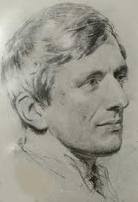
For many, many years I loved a particular prayer written by John Henry Newman. It is such an exceptionally beautiful prayer but one that I now see a little differently. Perhaps that is because it was written over a hundred years ago and, if one believes in any form of Divinity/God, everything evolves into something still more beautiful.
The prayer begins as evoking something separate from ourselves: it is 'your' fragrance and depends upon the external idea of God/Jesus and then involves such total self-abasement as to be unseen so that the person praying is insignificant. There's the rub. If the person praying is so self-abasing, how can he/she love the glory of the person or people for whom they are praying? How can one pray that people no longer see the you, but see only God, unless one sees that the perceiver is also God? Is not every single being an expression of God/Life? Why then debase ourselves in our prayers?
I love this beautiful prayer, and I think it would be even more beautiful if the line: "Shine through me and be so in me that every soul I come in contact with may feel Your presence in my soul..." were to read: Shine through me and be so in me that every soul I come into contact with, may feel the power within his/her own soul..."
It's so clear that the more one delves into the essence of life, the more one sees that any form of evangelisation is merely ego-centricity or fear. If people believe God is omnipresent, then surely every life is Divine and there is no need to correct or change it.
Dear Jesus,
Help me to spread Your fragrance everywhere I go.
Flood my soul with Your spirit and life.
Penetrate and possess my whole being so utterly that all my life may only be a radiance of Yours.
Shine through me and be so in me that every soul I come in contact with may feel Your presence in my soul...
Let them look up and see no longer me but only Jesus!
Stay with me and then I shall begin to shine as You shine, so to shine as to be a light to others;
the light, O Jesus, will be all from You;
none of it will be mine: it will be You shining on others through me. Let me thus praise You in the way You love best: by shining on those around me.
Let me preach You without preaching, not by words, but by my example, by the catching force, the sympathetic influence of what I do, the evident fullness of the love my heart bears for You.
Sunday, 26 September 2010
The Secret Garden

What sheer beauty is Agnieszka Holland's 1993 version of Frances Hodgson Burnett's "The Secret Garden". The scenery, the gorgeous animals, the beautiful shots of flowers and the brilliant casting (right down to the Yorkshire accents - which are so often too exaggerated or missed completely in attempts at films about Yorkshire!) not to mention the brilliant adaptation of the script with it's wonderful, wonderful message all make it for me one of the most beautiful films ever.
This was the first book we read as a class when I first started Grammar School and I am ashamed to say I missed to much of its wonders at the age of 11. Now, though, its wonder shine through so clearly! The way in which it is the angst of adults which makes Colin remain ill, and Mary's absolute denial of his illness that gets him walking again is so apt. The way the garden comes alive in all its beauty and how it is necessary to discount all that has been taught and perceived in order to restore that beauty....right down to Mary's words about the universe being within our own hearts....is so movingly true! The incredibly gifted actress Maggie Smith epitomises all that is confining and all that keeps people in their belief in illness and it takes a child's more powerful belief to throw her world into disarray but, by the end of the story, Maggie Smith's character is standing in awe.
From the book, I think this wonderful extract says so much about the whole nature of the story which was wasted upon me as an 11-year-old but what joy to understand it now!
One of the strange things about living in the world is that it is only now and then one is quite sure one is going to live forever and ever and ever. One knows it sometimes when one gets up at the tender solemn dawn-time and goes out and stands alone and throws one's head far back and looks up and up and watches the pale sky slowly changing and flushing and marvelous unknown things happening until the East almost makes one cry out and one's heart stands still at the strange unchanging majesty of the rising of the sun—which has been happening every morning for thousands and thousands and thousands of years. One knows it then for a moment or so...And it was like that with Colin when he first saw and heard and felt the Springtime inside the four high walls of a hidden garden. That afternoon the whole world seemed to devote itself to being perfect and radiantly beautiful and kind to one boy. Perhaps out of pure heavenly goodness the spring came and crowned everything it possibly could into that one place.
Tuesday, 21 September 2010

Robert Graves, perhaps best known for "I, Claudius" wrote some wonderful poems and this is one of my favourites for its fascinating understanding of interaction between friends:
"In Broken Images"
He is quick, thinking in clear images;
I am slow, thinking in broken images.
He becomes dull, trusting to his clear images;
I become sharp, mistrusting my broken images,
Trusting his images, he assumes their relevance;
Mistrusting my images, I question their relevance.
Assuming their relevance, he assumes the fact,
Questioning their relevance, I question the fact.
When the fact fails him, he questions his senses;
When the fact fails me, I approve my senses.
He continues quick and dull in his clear images;
I continue slow and sharp in my broken images.
He in a new confusion of his understanding;
I in a new understanding of my confusion.
Subscribe to:
Posts (Atom)