Where Wild Geese Fly
Chill falls the winter
and the evening sun descending,
pale as the moon.
An icy November sky.
Frozen the river,
and another day is ending.
Wild poppies wither in the frost
and die.
And wild geese fly
on silver wings over meadows,
far from this land,
this season of sad songs and snow.
Do they know I would go
if I had wings I’d follow,
home to the love I left so long ago?
Well I remember
burning bonfires bright and warming,
firelight and friends,
the glow of an autumn blaze.
On through December,
when the icicles were forming,
sleigh rides and laughter
of my childhood days.
And wild geese fly
on silver wings over meadows,
far from this land,
this season of sad songs and snow.
Do they know I would go
if I had wings I’d follow,
home to the love I left so long ago?
Soon shall the summer
steal across the wide horizon,
melting the ice
as southerly thaw winds blow.
Then shall the petals
shed their scent across the gardens
calling me back to love
I left so long ago.
And wild geese fly
on silver wings
over meadows,
far from this land,
this season of sad songs and snow,
do they know
I shall go!
I’ll find my wings and follow
home to the love I left so long ago.
The Original "Getting Real"

Please click on the picture to order this book.
Wednesday, 10 December 2008


Sunday, 7 December 2008
I'm Glad I'm Not Young Anymore
There's a song in "Gigi" called I'm Glad I'm Not Young Anymore.
We live very much in youth culture - I believe that is truer in America than in England, though I might be mistaken about that - and people go to such extremes to remove any signs of ageing, as though it is shameful to no longer be young.
Nature has no such qualms. Nature goes through her seasons so happily and the wise old trees are equally beautiful as the saplings, often more so. The trees and flowers are so refreshing in the spring, but the trees in the winter have a loveliness of their own. It's a wisdom, a certainty, a sense of everything being as it should be. Faces which are stretched and pulled tight by a scalpel are not nearly as beautiful to me as faces that tell a story - misery, selfishness, kindness, laughter - all these things are etched into faces and do we really want to remove those signs of life experience? Those signs of wisdom?
There are elderly people who take great pride in being old - why? It's no great honour to say you lived a long time. Equally there are people who are terrified of being old. Why? It's no great honour to say you are young. Surely, it's how we live that matters. Age is utterly irrelevant.
Having said that, and thinking I'm glad I'm not young anymore - isn't there something wonderful about being beyond the angst and self-consciousness of youth? Isn't there something wonderful about being able to feel deeply and not feel the world is about to collapse because something unpleasant has happened to you? Isn't there something wonderful about having the experience of so many different people coming in and out of your life that you gain a fuller picture? What is really sad to me, is that perhaps many people who want to appear eternally youthful, are really trying to capture a youth they never enjoyed or they live in fear of worse to come.
The most beautiful thing of all is surely to maintain the wonder of children, the excitement of adolescence, the confidence of early adulthood, and combine that with the wisdom of experience. Who cares how many years we've been here? The question really is, are we doing here what we came here to do?
So, if you wake on a Monday morning with a face like an old sack and wonder where the years went, why not think, "Well, this old sack is filled with goodies! I'll bring them out today like a magician brings a rabbit from a hat, with a young and happy heart!"
We live very much in youth culture - I believe that is truer in America than in England, though I might be mistaken about that - and people go to such extremes to remove any signs of ageing, as though it is shameful to no longer be young.
Nature has no such qualms. Nature goes through her seasons so happily and the wise old trees are equally beautiful as the saplings, often more so. The trees and flowers are so refreshing in the spring, but the trees in the winter have a loveliness of their own. It's a wisdom, a certainty, a sense of everything being as it should be. Faces which are stretched and pulled tight by a scalpel are not nearly as beautiful to me as faces that tell a story - misery, selfishness, kindness, laughter - all these things are etched into faces and do we really want to remove those signs of life experience? Those signs of wisdom?
There are elderly people who take great pride in being old - why? It's no great honour to say you lived a long time. Equally there are people who are terrified of being old. Why? It's no great honour to say you are young. Surely, it's how we live that matters. Age is utterly irrelevant.
Having said that, and thinking I'm glad I'm not young anymore - isn't there something wonderful about being beyond the angst and self-consciousness of youth? Isn't there something wonderful about being able to feel deeply and not feel the world is about to collapse because something unpleasant has happened to you? Isn't there something wonderful about having the experience of so many different people coming in and out of your life that you gain a fuller picture? What is really sad to me, is that perhaps many people who want to appear eternally youthful, are really trying to capture a youth they never enjoyed or they live in fear of worse to come.
The most beautiful thing of all is surely to maintain the wonder of children, the excitement of adolescence, the confidence of early adulthood, and combine that with the wisdom of experience. Who cares how many years we've been here? The question really is, are we doing here what we came here to do?
So, if you wake on a Monday morning with a face like an old sack and wonder where the years went, why not think, "Well, this old sack is filled with goodies! I'll bring them out today like a magician brings a rabbit from a hat, with a young and happy heart!"
Saturday, 6 December 2008
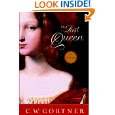
An Interview With C.W. Gortner about his latest book: THE LAST QUEEN

We are delighted to have been able to interview C.W. Gortner about his latest book:
THE LAST QUEEN (Ballantine Books 2008), a thoroughly absorbing novel about Juana of Castile, the last Queen of Spanish blood to inherit the throne.
H & C: From the moment we heard about THE LAST QUEEN, we were fascinated because, from the few references we had read about Juana, she had seemed a rather sad and insignificant woman, demented by the death of her husband. What inspired you to delve more deeply into her story in the first place?
C.W.Gortner: I was raised in southern Spain, near a ruined Moorish castle that had once been a summer residence of Juana's parents, Isabel and Fernando. Growing up, I was always fascinated by the legend of the Mad Queen, who'd allegedly dragged her husband's coffin with her throughout Spain and whose unwillingness to rule had eventually resulted in the end of an ages-long line of monarchs of Spanish blood. One year, my family took us on a trip to Granada, where Juana and Philip the Fair - her husband - are buried alongside Isabel and Fernando in the Cathedral. The sight of Juana's effigy, half-turned from her husband's, riveted me; and when I later went into the Alhambra and thought of her spending her youth there, I just had to know more. My mother tells me I asked a thousand questions about her: was she really mad? Why did she mourn Philip so? What happened to her? She haunted me; and many years later, after reading several biographies of her that left me with more questions than answers, I decided to investigate her on my own and perhaps find a way to satisfy both my questions and the desire to discover who she might have really been.
H & C: Would you say you approached your research in the manner of a detective, gradually uncovering more clues, or was there an intuitive sense from the start that there was far more to her than met the eye?
C.W. Gortner: I always had this intuitive sense that there was more to Juana's story, secrets and facts that had been distorted. We're talking, after all, about the daughter of one of history's most influential queens. Juana had been chosen by her mother to be the wife of Philip of Habsburg, the heir to a vast and powerful empire. It was a vital dynastic union for Spain, and a dual one, as Juana's brother Juan wed Philip's sister, Margaret. The marriages were strategic, designed to bolster Spain's prestige in European eyes and form an unbreakable alliance against Spain's territorial foe, France. I cannot emphasize enough just how importantly Isabel viewed her Habsburg alliance, how essential it was to strengthening Spain's international reputation and safeguarding Spanish claims in Italy. So many of Juana's biographers claim that she'd always been unbalanced, even in her youth, moody and melancholic, already on the inexorable path to dementia - but this didn't seem to correspond with the very fact that Queen Isabel had chosen Juana to represent Spain in the Hapsburg marriage. That was my first clue. Why choose the most unbalanced of her daughters for this incredible role? As I researched and traveled to the places associated with Juana, I discovered more information that refuted the established interpretation of Juana as an unstable woman unsuited to rule. I became a detective in that I deliberately set out to explore each of the alleged "facts" to see if they stood up to more enlightened ways of looking at history and women in history in particular.
H & C: The era in which THE LAST QUEEN is set, is one of enormously complicated political rivalries and intrigues. How did you tackle making those complexities accessible to readers who know little about the period?
C.W. Gortner: That was definitely my primary challenge. Because so many English-speaking readers have more working knowledge of English history, I had to set Juana's story in the larger context and make her importance as both an international figure and a Spanish queen accessible and understandable. One of the ways I did it was to bring forth the associations Juana had with famous historical figures most historical fiction readers are familiar with, such as Catherine of Aragon. She was Henry VIII's first wife and Juana's youngest sister. We meet Catherine in the book. Readers are also familiar with Charles V, as he was part of drama set in motion by Henry VIII to annul his marriage to Catherine; Charles was also Juana's eldest child. Naturally, there were complexities that had to be simplified for dramatic purpose. For example, the convoluted struggle between Spain and France over the crown of Naples was long-standing and had many factors woven into it, with each side claiming their superior position. Rather than explain all of it and bog the narrative down in unnecessary and complicated details that had, in the end, little to do with the immediate story, I simplified the argument through the eyes of the characters. Juana's father Fernando of Aragon is the one defending his claim to Naples claim against France; and as Juana adores her father in the novel, he explains it to her in ways that she, as a young and reluctant bride - and the reader - can understand. It's a matter of looking at the larger picture, determining as a writer which parts the reader must know, and then figuring out unobtrusive and hopelessly seamless ways to weave these parts into the story If it affected Juana directly, I tackled it. If not, I made conscientious decisions about what to include and what to leave out.
H & C: In commenting on your book, you said that Juana had been denied a voice for centuries and 'the time has come to let her speak.' Was it for this reason that you chose to write the novel in the first person?
C.W. Gortner: Actually, the first draft was in third person. But I hit a wall when I finished the manuscript; Juana proved elusive in third person. And my agent, bless her, told me she felt Juana came across as enigmatic and unreliable. I realized then that I had inadvertently shied away from taking a definitive stance with her, perhaps in the mistaken hope that I could leave it to the reader to decide ultimately who Juana was. My agent thought I had done enough groundwork to embody her fully, so I cautiously revised the first few chapters in the first person. As it turned out, I found this exercise quite liberating and began to see how I could capture her in a deeply personal way that I'd not been able to do before. I ended up re-writing the entire book, ripping out old scenes and creating new ones, so I could discover the woman I'd researched for years but had kept at arm's length. At first, I found it intimidating to write in the first person as a woman; but emotions do not recognize gender. We all know what it feels like to love, to hate, to be betrayed, to long, to laugh, to hope. Once I managed to suppress my ego (I employed an acting technique, in which you subdue your personality in order to inhabit the character you're playing) I found that "becoming" Juana came naturally and far more easily than looking at her through the third-person lens. I also found that some of the knots in the story dissolved, because now she herself could live out the ambiguities of her own life. Rather than bear witness to them in third person, I "lived" them through her.
H & C: Did you find there were drawbacks in approaching the novel from that viewpoint?
C.W. Gortner: There are always drawbacks to any viewpoint. First person narrows the story to one character's point of view; what the character doesn't know, the reader can't know. Foreshadowing pivotal events becomes more difficult, as does bringing to life the thoughts of other characters. However, it is also a marvelous vehicle for focusing on the lead character and staying on course with your story. In third person, I have a tendency to want to digress, to swim into the broader currents of historical events that muddy my central storyline, as well as leap into every one's heads. I first started writing fiction in the third person but for me personally, first person has become more immediate and compelling. That of course might change in the future, depending on the demands of the story I'm telling. For Juana, however, it was the perfect viewpoint for the story I wanted to tell.
H & C: Do you think there are difficulties for a man writing from a woman's perspective - particularly a woman of a different era?
C.W. Gortner: I touched on this earlier, and, yes, of course; not just as a woman but as a person who lived in a different time. For all we think we may know about life in the 16th century - and we know a lot! - the truth is all we can achieve as novelists is a close approximation of the reality of life in those times. I am enamored of the period but I do not share its beliefs; the religious intolerance, misogyny, racism, cruelty towards the impoverished and towards animals are distasteful aspects of the time that I do not admire. But in order to portray them accurately and communicate insightfully with my reader, I must understand why people felt and acted the ways they did. Even a Grand Inquisitor burning heretics had his reasons and they made sense to him. I don't condone his actions but I must comprehend his way of thinking. The same applies to writing as a woman in a different era; I had to dig deep into myself to uncover the commonalities we share, despite our genders; the bias and passion and darkness. And whatever I did not know - such as the act of giving birth - I questioned my women friends about in minute detail. A writer needn't be shackled by our sex: we can research emotion just as we do facts. And I believe our hearts don't recognize the boundaries of our physical exteriors. The hardest part is letting go of our ego and the societal skills we are taught to embody in order to "be" a man or woman. Ultimately, I think I succeeded in portraying a woman's point of view but I must defer to my readers, in the final accounting. It does bear noting that my agent and all my editors are women, and not once did they question my ability. Indeed, they expressed astonishment at how well I captured Juana's perspective.
H & C: You comment, too, on the way in which women have been badly treated throughout history. Did this influence your decision to write of Juana's life?
C.W. Gortner: It influences everything I write. I'm an innate feminist. I think women have suffered from historical oppression because history, by and large, is told from the male point of view. This was certainly at the forefront of my mind as I embarked on the novel. I could almost see the distortions in the biographies and contemporary accounts, the ways in which Juana's struggle for power had been degraded to serve the perspective of the men who had wronged her. Almost nowhere in these accounts do you hear her voice, do you see her as anything other than a stereotype: she's the besotted princess enraged by jealousy, the bereft widow so disconsolate she can think of nothing else, the mad crone worshipping a corpse as her kingdom crumbles around her. She's the ultimate victim, helpless before her own emotional turmoil. And that, for me, was the biggest red flag of all. No woman I've ever met is that one-dimensional!
H & C: Your extensive research involved being in the places where Juana lived, and walking the roads she had travelled. Did that help you to gain a fuller understanding of Juana? In what ways did the landscape of Castile help shape her character?
C.W. Gortner: Absolutely. Juana was a quintessentially Spanish woman. She cannot have existed as she was in any other country than Spain. Being half Spanish myself and having lived in Spain helped a lot, but seeing the places she lived, walking the paths she took - it alchemized my understanding of her. The aridity and desolation of Castile in winter, the verdant abundance of spring and scorching heat of summer; these are all part of Juana's soul and symbolize her contradictions and pride, her strength and her despair. I believe she loved Spain with an intensity that surpassed her love for Philip, and in order to understand how she became the woman she was you have to understand the passion of being a Spaniard. For me, this is perhaps the most challenging and defining aspect of writing a historical character. Today, we have globalization; cell phones, blue jeans and fast food are part of the lexicon of almost every culture. In Juana's era, being a princess of Castile signified a way of thinking, of acting, of seeing the world that was very different from being a princess of France or England. You have to pull back the veil between the past and the present and reveal the country as it was when your character lived in it. If you succeed, then you can visualize how the landscape around her shaped her personality. And by landscape, I mean both the physical and emotional. We are all shaped by our surroundings; the trick is to understand how this occurs and apply it to a time when life was more brutal, shorter in length, and more intense in its quest for survival.
H & C: Why, do you think, the information about Juana remained classified even in the 20th century? Was the truth you uncovered so devastating that it meant history had to be completely rewritten?
C.W. Gortner: I think the information remained classified as a holdover from the embargo first set on it by her son Charles V. After the Comuneros revolt and his private meeting with his mother -events I do not cover in the novel as they took place years after my story ends - Charles ordered a new set of custodians to guard Juana and had her access to the outside world severely curtailed. These custodians were expected to answer only to him, and their voluminous letters detailing Juana's life in confinement for the next twenty-odd years are part of the documents that ended up in the classified file. Why? What happened between Chares and Juana at that meeting that made him enforce her imprisonment to such an extreme? And what did the custodians' letters say that Charles didn't want anyone else to see? I think they said his mother was sane, and from what I was able to read - as many of the documents are no longer extant - I think Charles had determined that this fact could never be made public, as it would have essentially signified that he, the Habsburg emperor, held his mother, the rightful queen of Spain, under duress. Hundreds of years later, after the Spanish Civil War, Franco threw out the monarchy and established his fascist regime. Anything relating to the monarchist rule was suppressed during his regime and by default, the papers concerning Juana fell under his dragnet.
I think the devastating truth that was kept hidden was that Juana was driven to madness years after her initial imprisonment and subsequent rulers of Spain conspired to keep this fact a secret. Even Francesco Borja, Father General of the Jesuit Order who was sent to question Juana late in her life over rumors that she had embraced heresy, came away from several in-depth meetings with her shaken by her conviction and confused over her alleged insanity. He saw evidence of instability - who wouldn't after spending years in confinement in a castle? - but his letters to Charles V, which can still be read today, are almost chastising in their imploration of Charles to treat Juana with the dignity and decorum her station demanded. Borja must have seen that an injustice had been perpetuated and he did what he could to alleviate her suffering.
H & C: Why did you choose to write of Juana's life in the genre of a novel, rather than a biography?
C.W. Gortner: I'm a novelist by nature, not a biographer. Though I enjoy reading biography, it's not what I am personally compelled to write. As a writer, I'm motivated by the challenge of bringing history to life in a novelized form. Biographers can remain neutral; they can state: "She attacked Philip's mistress in a jealous rage." But a novelist must get inside the character and find his or her motivation. I also love the craft of interpreting history through the eyes of the characters. These characters often become both the historical figure that inspired them and something more; they transform in unique ways that reflect both the writer's inner world and the worlds of the readers he or she seeks to reach.
H & C: You must have had a great sense of satisfaction in bringing to light so many of the inaccuracies that had been taken as fact for centuries. Would you say that historical novelists have a responsibility to correct many misconceptions about people of the past?
C.W. Gortner: No. I don't see myself as having brought to light inaccuracies so much as I sought to portray Juana of Castile from another perspective. While I endeavored to remain historically accurate, I freely admit that I altered certain events and timelines to make the novel more accessible. Historical novelists are, in the final say, storytellers. We seek to entertain and transport readers to another place; we want them to experience the worlds we create on an emotional level. While accuracy is important - and if you have the chance to clear up misconceptions along the way, well, that's fine, too - ultimately I don't think it's the novelist's responsibility to "set the record straight." This has become a bone of contention at times, I know, between readers and certain books, particularly concerning inaccuracies or disagreements about a character or event. While gross inaccuracies should be avoided whenever possible, novelists are human and mistakes do happen. Sometimes, in order to facilitate a story's dramatic arc, a novelist will make certain choices to enhance this event beyond its actual historical significance, or set that event later in time to ease the narrative flow, etc. Such choices are usually undertaken with care and consideration, as historical novels cannot, by their very nature, capture all the intricacies and the mendacities of history; they capture a moment, a slice. They're life with the boring parts taken out (hopefully!) To me, historical novels are just that: fictional recreations of the past for a modern-day audience, not mechanisms for debunking historical record. What I do think historical novels can do is stimulate interest in a subject and present diverse ways of interpreting history. After all, there are always different sides to every story and historical novels are the perfect vehicle for telling them.
H & C: Quite often, when one begins to research one subject or character, many other amazing truths come to light. Was this so in the case of your research into Juana's life, and has it given rise to ideas for further books?
C.W. Gortner: Yes. I've grown excited about writing more about Juana's mother, Isabel, and hope to do so at a later date. But I must say, that once I've finished a novel I tend to want to go somewhere else for my next project. I just finished my novel about Catherine de Medici, set in 16th century France, and am now starting research on my next book, which will be set in early 15th century Italy. After that, I hope to return to Spain and the court of Philip II. I like to travel as a writer, both physically and artistically.
H & C: Thank you so much for telling us more about the background to this fascinating story!
C.W. Gortner: I really appreciate this opportunity to visit this blog. If readers want to learn more about me or my work, please visit www.cwgortner.com where you can take a tour of Juana's world and, if you lead or are part of a book group, sign up for an author chat with me. I love talking to readers and am always available for book group chats either via speaker phone or in person. I hope your readers enjoy discovering THE LAST QUEEN as much as I have enjoyed writing it.
Friday, 5 December 2008
Money Talks
In a lovely wooden box, engraved with the initials of someone I never knew and have no idea where the box came from - I just always had it since childhood - there is a stash of old coins from the pre-decimalisation era of my earliest years. Some of them I put there, as a child, others were given to me later from ancient relatives. There are worn pennies from as far back as 1864; silver thre'penny bits and the other hexagonal sixpenny pieces, farthings and ha'pennies, and some half crowns and crowns. On some, Queen Victoria - in various eras - is depicted on one side and Britannia on the other. On others there is George V, George VI, and Queen Elizabeth II, also in various eras. They are all quite worthless now but, holding them in my hand, there is such a sense of history about them and they say a lot.
Firstly, I wish they had not compelled us to remove Britannia from our coinage. Secondly, I pray that they will not deprive us of our history by switching us to the Euro, because coins - like stamps or like letter boxes and telephone boxes - hold history and tell us where we came from. It's not a question of economics; it's a question of identity. Thirdly - the overriding thought - I touch these coins and wonder how many hands they passed through. Were they dropped into charity boxes from the pockets of philanthropists? Were they fought over? Were they used to pay for child labour, or for crimes? Were they dropped on the ground and trodden on by people in clogs, making their way home from the mills and eagerly gathered up by someone thinking they had made a great find? Did they pay for a gill of gin or did they pay for a gift for a child? Did they exchange hands gladly or were they handed over grudgingly? Who held them? What kinds of kindly or grasping hands? Where have they been and how were they used? A million stories flow from every one of them...Money does talk. It talks of history and identity and tells its own tale.
Money is an odd thing, isn't it? It was a piece of metal or pieces of paper. It's something that changes in value. It used to be measured in coinage and now is measured by a click on the screen or a piece of plastic stuck in the hole in the wall. Yet people kill for it, people create wars for it, people die for it. Strange how civilised we consider ourselves compared to animals - at least they fight over something concrete like something to eat or a mate. Only humanity could be bizarre enough to cause wars over something that is only a concept...Ho hum!
Firstly, I wish they had not compelled us to remove Britannia from our coinage. Secondly, I pray that they will not deprive us of our history by switching us to the Euro, because coins - like stamps or like letter boxes and telephone boxes - hold history and tell us where we came from. It's not a question of economics; it's a question of identity. Thirdly - the overriding thought - I touch these coins and wonder how many hands they passed through. Were they dropped into charity boxes from the pockets of philanthropists? Were they fought over? Were they used to pay for child labour, or for crimes? Were they dropped on the ground and trodden on by people in clogs, making their way home from the mills and eagerly gathered up by someone thinking they had made a great find? Did they pay for a gill of gin or did they pay for a gift for a child? Did they exchange hands gladly or were they handed over grudgingly? Who held them? What kinds of kindly or grasping hands? Where have they been and how were they used? A million stories flow from every one of them...Money does talk. It talks of history and identity and tells its own tale.
Money is an odd thing, isn't it? It was a piece of metal or pieces of paper. It's something that changes in value. It used to be measured in coinage and now is measured by a click on the screen or a piece of plastic stuck in the hole in the wall. Yet people kill for it, people create wars for it, people die for it. Strange how civilised we consider ourselves compared to animals - at least they fight over something concrete like something to eat or a mate. Only humanity could be bizarre enough to cause wars over something that is only a concept...Ho hum!
Wednesday, 3 December 2008
Nature and Cycles and Seasons
I don't remember the first time I heard about death. You would think that something so alarming would be a major trauma of childhood realizations, but I have never met anyone who remembers when their mortality first became apparent. At the changing of the seasons, at the stillness of the year, when the trees are like skeletons, the flowers have gone and the sky is starkly bright, that thought comes home.
Everything moves in cycles and, though we live now in a semi-seasonless, hourless world, where we are governed not by Nature but by technology, it is interesting to think sometimes how far we have come from our roots and who we really are.
Nature is so much wiser. Nature doesn't go against the grain and force summer flowers to bloom in winter or the sun to shine in the middle of the night. Nature allows things to move at their natural pace; Nature has no targets; Nature doesn't expect everything and everyone to be the same or to fit the same pattern; Nature is filled with diversity and yet everything has its place and moves in perfect syncopation.
Nowadays, it seems, we think we are more powerful than Nature. Because we can create light in the middle of the night and can create heat in the middle of winter; and because we can create and then combat disease, we think we are overcoming Nature. We even have the audacity to think we are so powerful that our little footprints and meddling have altered Her course.
Nature, to me, is like a wise Mother who sits silently in the middle of chatter - the chatter where children argue and struggle for supremacy in a game and believe for an hour or two that they are Richard the Lionheart, Spiderman, or any superhero and things seems to be of huge importance - and all the while, the wise Mother just goes about her business calmly, listens and shakes her head and then says, "It's time for bed children." The games are over and reality dawns.
Powers, dominations, kingdoms rise and fall. Nature, and the gentle hearts who listen to her wisdom, go on - as Robert Louis Stevenson so brilliantly wrote - 'at their own private pace, like a clock in a thunderstorm.'
I don't remember the first time I heard about death. Still less, do I remember anyone ever teaching me what it really means to be alive. Perhaps that is a lesson we learn for ourselves; and perhaps that is the only lesson worth learning.
Everything moves in cycles and, though we live now in a semi-seasonless, hourless world, where we are governed not by Nature but by technology, it is interesting to think sometimes how far we have come from our roots and who we really are.
Nature is so much wiser. Nature doesn't go against the grain and force summer flowers to bloom in winter or the sun to shine in the middle of the night. Nature allows things to move at their natural pace; Nature has no targets; Nature doesn't expect everything and everyone to be the same or to fit the same pattern; Nature is filled with diversity and yet everything has its place and moves in perfect syncopation.
Nowadays, it seems, we think we are more powerful than Nature. Because we can create light in the middle of the night and can create heat in the middle of winter; and because we can create and then combat disease, we think we are overcoming Nature. We even have the audacity to think we are so powerful that our little footprints and meddling have altered Her course.
Nature, to me, is like a wise Mother who sits silently in the middle of chatter - the chatter where children argue and struggle for supremacy in a game and believe for an hour or two that they are Richard the Lionheart, Spiderman, or any superhero and things seems to be of huge importance - and all the while, the wise Mother just goes about her business calmly, listens and shakes her head and then says, "It's time for bed children." The games are over and reality dawns.
Powers, dominations, kingdoms rise and fall. Nature, and the gentle hearts who listen to her wisdom, go on - as Robert Louis Stevenson so brilliantly wrote - 'at their own private pace, like a clock in a thunderstorm.'
I don't remember the first time I heard about death. Still less, do I remember anyone ever teaching me what it really means to be alive. Perhaps that is a lesson we learn for ourselves; and perhaps that is the only lesson worth learning.
Tuesday, 2 December 2008
The Windy Moors
The snow continues and, apart from the images it evokes of Imperial Russia - the winter balls, the opulent carriages, the wilderness of Siberia, and the snowflakes on the lamps of Grand Duke Serge's carriage, as he and Ella (Grand Duchess Elizabeth) emerge from the theatre only days before his assassination; Ella, kneeling over his remains in the snow...It also brings to mind the 'wily windy Moors' of Emily Bronte's beautiful experience (and Kate Bush's fabulous interpretation of it!).
Today, according to the local news, Haworth was deep in snow. The silence and bleakness of snow seems so apt for the fascinating soul of Emily Bronte! Seemingly sheltered, the daughter of a parson, cut off from the world, despising having to be in company - to the extent that she was ill if she were compelled to be away from the freedom of the Moors and her own inner world for any length of time - she lived within herself with so mystical and imaginative an inner life that she seemed barely capable of surviving in the day-to-day world. The contrast of appearances and what is really so, is so striking in Emily Bronte!
At the top of a hill, the parsonage overlooks a graveyard where many of the headstones were originally laid flat on the earth so that wolves didn't dig up the bodies, or so that - which is more macabre? - the undertakers could turn the stones over and engrave names on the other side to fit more bodies into the graves! This was the view from Emily's windows. All around was the great expanse of the Moors. She never married. She never did very much at all. A brief spell in Brussels, where she was viewed as unfriendly; working as a teacher and hating every moment that kept her away from the freedom to walk and think and be with her beautiful animal friends...And yet, what an inner life that came out in such writing as 'Wuthering Heights' with its darkness and shadow side, with its passion and sheer, raw, untamed emotion and 'violence' - truly Nature in the raw. No wonder she is seen as such a 'Pagan soul'!
To me, Emily Bronte is a true mystic. Her soul was forever 'in another place' and unfettered. If only she had found a way to live on earth what her soul was reaching for! Her brilliant poem The Prisoner speaks so clearly of that anguish of disparity between 'what the soul knows' and physical life; the sense of being enchained in a body:
...Mute music soothes my breast - unutter'd harmony
That I could never dream, till Earth was lost to me.
Then dawns the Invisible; the Unseen its truth reveals;
My outward sense is gone, my inward essence feels;
Its wings are almost free--its home, its harbour found,
Measuring the gulf, it stoops, and dares the final bound.
O dreadful is the check - intense the agony -
When the ear begins to hear, and the eye begins to see;
When the pulse begins to throb - the brain to think again -
The soul to feel the flesh, and the flesh to feel the chain.
I wish she could have found a way for her Spirit to be free, without having to leave at such an early age. But she loved the inner worlds, and the beautiful snow creates that sense of
stillness, wherein the inner and the outer merge.
Today, according to the local news, Haworth was deep in snow. The silence and bleakness of snow seems so apt for the fascinating soul of Emily Bronte! Seemingly sheltered, the daughter of a parson, cut off from the world, despising having to be in company - to the extent that she was ill if she were compelled to be away from the freedom of the Moors and her own inner world for any length of time - she lived within herself with so mystical and imaginative an inner life that she seemed barely capable of surviving in the day-to-day world. The contrast of appearances and what is really so, is so striking in Emily Bronte!
At the top of a hill, the parsonage overlooks a graveyard where many of the headstones were originally laid flat on the earth so that wolves didn't dig up the bodies, or so that - which is more macabre? - the undertakers could turn the stones over and engrave names on the other side to fit more bodies into the graves! This was the view from Emily's windows. All around was the great expanse of the Moors. She never married. She never did very much at all. A brief spell in Brussels, where she was viewed as unfriendly; working as a teacher and hating every moment that kept her away from the freedom to walk and think and be with her beautiful animal friends...And yet, what an inner life that came out in such writing as 'Wuthering Heights' with its darkness and shadow side, with its passion and sheer, raw, untamed emotion and 'violence' - truly Nature in the raw. No wonder she is seen as such a 'Pagan soul'!
To me, Emily Bronte is a true mystic. Her soul was forever 'in another place' and unfettered. If only she had found a way to live on earth what her soul was reaching for! Her brilliant poem The Prisoner speaks so clearly of that anguish of disparity between 'what the soul knows' and physical life; the sense of being enchained in a body:
...Mute music soothes my breast - unutter'd harmony
That I could never dream, till Earth was lost to me.
Then dawns the Invisible; the Unseen its truth reveals;
My outward sense is gone, my inward essence feels;
Its wings are almost free--its home, its harbour found,
Measuring the gulf, it stoops, and dares the final bound.
O dreadful is the check - intense the agony -
When the ear begins to hear, and the eye begins to see;
When the pulse begins to throb - the brain to think again -
The soul to feel the flesh, and the flesh to feel the chain.
I wish she could have found a way for her Spirit to be free, without having to leave at such an early age. But she loved the inner worlds, and the beautiful snow creates that sense of
stillness, wherein the inner and the outer merge.
Monday, 1 December 2008
Birds Singing In the Snow

December and there was snow - how perfect is that? It wasn't the beautiful depths of snow as on André's lovely photograph but perhaps it will come and go and, for the first time in years, we will have a proper white Christmas.
Once all the traffic rush and bothers about transport are over, there is something so calming about the snow; a sort of stillness when all the sounds are muffled, as though Nature is saying, "It's time to be still and reflective." Seeing the frozen grass and fallen leaves, like the white hair of the earth, it seemed as though it was the part of the year's cycle when Nature is old and wise and still. It brings a quietness inside.
Strange how the birds seem to rejoice in the snow! On the damp, grey days, the birds seem so silent but in the icy sunshine, they all start singing again. There is something so beautiful about the sound of winter birds singing in the snow.
Subscribe to:
Posts (Atom)