Rod McKeown's poem, "And Sometimes" is something I am sure most of us empathise with at some point in our lives, and the onset of the January blues adds to the sense of it:
"....The beating of the heart can stifle anything,
Jackhammers and jack-in-the-boxes, anything.
And sometimes the heart beats so fast and so loud
And nobody hears it,
That you find yourself wishing it would stop."
Happily, there is an unexpected ending to the poem...
"And then, someone new moves down the block
And things are different sometimes."
In the post-Christmas, post-New Year months before spring, there is often a sense of gloom around. Anti-climax or just 'more of the same' after the great rush of New Year resolutions. But it's okay. And, whatever the time of year, there are times when, out of the blue, the kindness of strangers reaches right down to the core of our being and lets us know that we're not fighting a losing battle or drifting into oblivion. The kindness of strangers is something that often moves me so deeply it brings tears to my eyes. There are moments when we pass others people like 'ships in the night' and somehow they make a massive difference and we never see them again or have the chance to thank them.
Many years ago, in a feeling of utter despair after a misadventure in France, I arrived penniless in London in the middle of the night and needed to return to Yorkshire. Having already bought a coach ticket (but the coach didn't leave till mid-morning) and having no money for a train ticket, I trudged about and ended up in Victoria Coach Station. It felt safe there because there were people about but around midnight they began to lock the offices and I was cold and very hungry. I went to the offices as they were closing and asked if they knew of safest place for the night. A coach man said, "Only a hotel." I replied, "I have no money." He shrugged and I walked away trudging back to the railway station. Then I heard footsteps behind me and it was the coach man. He said, "I will lose my job if you tell anyone about this, but I wouldn't want my daughter wandering around here at night. You can sleep on a coach. You'll be safe there, and in the morning a man will come on to clean it and I'll tell him you're there." He opened a coach and I slept soundly. In the morning the coach cleaner came and smiled and gave me toast and tea. In the midst of my deepest unhappiness, "someone new moved down the block" and made such a difference. I wanted to write to thank them, but the coach man asked me to say nothing of it, so I never did. It is long enough ago now to say, if he ever reads this, that he really restored my faith in human nature and I wish there were a way to thank him.
Since then, I remember many kindnesses of strangers and I think, when things look gloomy, there are a million angels around us and, to quote George Eliot:
"The golden moments in the stream of life rush past us and we see nothing but sand; the angels come to visit us, and we only know them when they're gone."
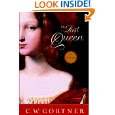
The Original "Getting Real"

Please click on the picture to order this book.
Saturday, 3 January 2009


Thursday, 1 January 2009
The Kingdom of Childhood
How beautiful is the Kingdom of Childhood when, to quote Wordsworth, "trailing clouds of glory do we come..."; when we can turn a single plank of wood into a ship, a castle, a slide or a see-saw; when we find delight in coloured lights or the crinkling of wrapping paper; when stars are magical talismans and a coloured stone found on a beach is taken for a treasure!
How sad it is that the beautiful magic is so quickly squeezed out of us. We are packed into regimented lines and told to hide all we know to be true. Our angels disappear and the magic fades because we are taught to stop believing in it and we grow up and smile fondly - perhaps even enviously - at little children who still understand what we're really about. If only we grew wiser instead of just older - wiser with the wisdom of the heart that returns us more and more to our original 'clouds of glory', the world would be such a happier place.
2009, the commentators tell us, is to be a year of gloom. If we live by economics alone, and believe that our lives are governed by politicians, bankers and one-dimensional thinkers, that might be the case. But there is something much deeper and I can't help thinking that this so-called meltdown of economies is part of a bigger plan - one in which we no longer hand over everything to that 'grown up' mind that obviously fails at every turn. History teaches us that all we ever gained from that is war upon war, power-seeking upon more power-seeking...What about the angels of our childhood? Is it any more ridiculous to put faith in them, than it is to put faith in bankers and would-be political leaders?
Personally, I believe in angels; I believe that coloured stones on beaches are worth as much as diamonds; I believe that stars aren't just the remnants of some explosion in the galaxies. Looking into things, instead of just at them, I believe in the Spirit of the One Life in trees and plants and lakes and all creatures. And I believe that 2009 is a wonderful year for everyone who chooses to believe it is so.
Coventry Patmore's beautiful poem says it all:
My little Son, who look'd from thoughtful eyes
And moved and spoke in quiet grown-up wise,
Having my law the seventh time disobey'd,
I struck him, and dismiss'd
With hard words and unkiss'd,
—His Mother, who was patient, being dead.
Then, fearing lest his grief should hinder sleep,
I visited his bed,
But found him slumbering deep,
With darken'd eyelids, and their lashes yet
From his late sobbing wet.
And I, with moan,
Kissing away his tears, left others of my own;
For, on a table drawn beside his head,
He had put, within his reach,
A box of counters and a red-vein'd stone,
A piece of glass abraded by the beach,
And six or seven shells,
A bottle with bluebells,
And two French copper coins, ranged there with careful art,
To comfort his sad heart.
So when that night I pray'd
To God, I wept, and said:
Ah, when at last we lie with trancèd breath,
Not vexing Thee in death,
And Thou rememberest of what toys
We made our joys,
How weakly understood
Thy great commanded good,
Then, fatherly not less
Than I whom Thou hast moulded from the clay,
Thou'lt leave Thy wrath, and say,
'I will be sorry for their childishness.'
How sad it is that the beautiful magic is so quickly squeezed out of us. We are packed into regimented lines and told to hide all we know to be true. Our angels disappear and the magic fades because we are taught to stop believing in it and we grow up and smile fondly - perhaps even enviously - at little children who still understand what we're really about. If only we grew wiser instead of just older - wiser with the wisdom of the heart that returns us more and more to our original 'clouds of glory', the world would be such a happier place.
2009, the commentators tell us, is to be a year of gloom. If we live by economics alone, and believe that our lives are governed by politicians, bankers and one-dimensional thinkers, that might be the case. But there is something much deeper and I can't help thinking that this so-called meltdown of economies is part of a bigger plan - one in which we no longer hand over everything to that 'grown up' mind that obviously fails at every turn. History teaches us that all we ever gained from that is war upon war, power-seeking upon more power-seeking...What about the angels of our childhood? Is it any more ridiculous to put faith in them, than it is to put faith in bankers and would-be political leaders?
Personally, I believe in angels; I believe that coloured stones on beaches are worth as much as diamonds; I believe that stars aren't just the remnants of some explosion in the galaxies. Looking into things, instead of just at them, I believe in the Spirit of the One Life in trees and plants and lakes and all creatures. And I believe that 2009 is a wonderful year for everyone who chooses to believe it is so.
Coventry Patmore's beautiful poem says it all:
My little Son, who look'd from thoughtful eyes
And moved and spoke in quiet grown-up wise,
Having my law the seventh time disobey'd,
I struck him, and dismiss'd
With hard words and unkiss'd,
—His Mother, who was patient, being dead.
Then, fearing lest his grief should hinder sleep,
I visited his bed,
But found him slumbering deep,
With darken'd eyelids, and their lashes yet
From his late sobbing wet.
And I, with moan,
Kissing away his tears, left others of my own;
For, on a table drawn beside his head,
He had put, within his reach,
A box of counters and a red-vein'd stone,
A piece of glass abraded by the beach,
And six or seven shells,
A bottle with bluebells,
And two French copper coins, ranged there with careful art,
To comfort his sad heart.
So when that night I pray'd
To God, I wept, and said:
Ah, when at last we lie with trancèd breath,
Not vexing Thee in death,
And Thou rememberest of what toys
We made our joys,
How weakly understood
Thy great commanded good,
Then, fatherly not less
Than I whom Thou hast moulded from the clay,
Thou'lt leave Thy wrath, and say,
'I will be sorry for their childishness.'
Tuesday, 30 December 2008
My New Coat Makes Me Happy
New Year is a time for clearing out the old and bringing in the new. While clearing wardrobes and cupboards, it occurred to me how interesting it is that some garments - regardless of their appearance - make you feel great when you're wearing them, and others have associations with sadness or gloom that doesn't come from any specific moment while wearing them. I once had a wonderful pair of 'designer-label' (whatever that really means since everything is designed by someone!) jeans that fitted to perfection but every time I put them on, I felt unhappy. Then there was an old scruffy jumper that I wore till it virtually fell from my shoulders, and I parted with it reluctantly because it had a happy atmosphere about it. Perhaps the jeans were made in some sweat shop by some unhappy person who was being paid a pittance for their efforts and every stitch was sewn in with sadness (I try to find out where things come from to make sure that doesn't happen but you never know). Perhaps the scruffy jumper was made by a happy person somewhere...
They say that happy cooks create meals that bring health and joy; unhappy cooks, whatever their ability, create meals that leave an unhappy taste. I think this is true.
There is an atmosphere about us that we create. We might think that what we do is worthless or meaningless and makes no difference, or that some moments of our lives are unimportant. Standing in a queue in a post office or supermarket, we might feel like we're just killing time, but supposing that every moment we are creating something - adding to, or taking from the loveliness of creation. It makes every moment worthwhile. It makes a difference what we send out in everything we do.
If any of the people who made my new coat - which I love! - chances upon this site, I hope you know that every button you sewed, every seam, and the feel of the wool (thank you, sheep, and farmer and dyer and everyone else involved in its creation) has made someone very happy. Thank you!! How beautiful to create things that bring so much pleasure to others!
They say that happy cooks create meals that bring health and joy; unhappy cooks, whatever their ability, create meals that leave an unhappy taste. I think this is true.
There is an atmosphere about us that we create. We might think that what we do is worthless or meaningless and makes no difference, or that some moments of our lives are unimportant. Standing in a queue in a post office or supermarket, we might feel like we're just killing time, but supposing that every moment we are creating something - adding to, or taking from the loveliness of creation. It makes every moment worthwhile. It makes a difference what we send out in everything we do.
If any of the people who made my new coat - which I love! - chances upon this site, I hope you know that every button you sewed, every seam, and the feel of the wool (thank you, sheep, and farmer and dyer and everyone else involved in its creation) has made someone very happy. Thank you!! How beautiful to create things that bring so much pleasure to others!
Sunday, 28 December 2008
Wars of Religion and Divine Love
I realize that these views may be controversial and it isn't my intention to criticise or offend anyone else's beliefs. These are merely my thoughts at Christmas-time, which is always a time of reflection.
"Religion," I was taught as a child, is a 'rule of life' or way of measuring - a religio - or 'right thinking.' The religion in which I was raised, preached a beautiful God of Love; a Father; a God whom we find in each other and who, because we all made such a mess of it, was incarnated in Jesus. I loved my religion - I loved the incense, the sense of it touching my own personal 'tragic hero' (on which many of us, in our youth, love to thrive); I loved the beauty of stained-glass windows and the smell of churches, the beautiful writings of saints, the loveliness of the people within my parish...and I loved how it touched my own sense of martyrdom. But some things didn't make sense. I could accept those which didn't make sense to my intellect (after all, I was told, you're not God so His ways are mysterious to us); I could accept those that didn't make sense to my heart - the age-old question "If God is love, why do people suffer?" - Okay, God's ways are mysterious and we step outside of our immediate surroundings and it all makes sense. But still there was niggle right down in my soul - nothing to do with intellect or emotion...something deeper.
The story of the Garden of Eden, I learned, was the terrible tragedy of our kindly Father, offering us everything that was beautiful, and what did our forebears do? They ungraciously disobeyed him and ate the fruit of the wrong tree. For that, women (since the woman, having been temped by the serpent, tempted the man) were condemned forever to suffer in childbirth and humanity was condemned to sweat and labour and ousted from the garden. Now, it wasn't just the culprits who suffered that, but everyone forever. So...the kind, omnipotent, omniscient God of Love created a beautiful garden with a great big temptation in the middle of it; his children yielded to temptation and ever since then we all crawl on our bellies and are born with original sin. "Ho hum!" I thought as a child, "that seems a bit petty from someone so loving and so great?" and when I questioned this was told, "Everyone who ever lived would have committed the same sin - everyone except Jesus or Mary - and that is why we are who we are. That is the meaning of original sin."
So, basically, we're born 'bad' but we're the children of God? Does sour fruit come from a healthy tree? Do figs bring forth grapes? Does the God of Love bring forth 'bad' children?
Happily, I was told, our loving Father takes pity on us and became Incarnate to show us the extent of His love. The beautiful Christ-child was born; angels sang, wise men and kings worshipped him and all kinds of wonders took place because we were at last saved from the sins of our forebears. Hallelujah! Except, we were so wicked that this beautiful child had to then take upon himself the weight of all of our sins down the ages. He had to go through the sheer horror of the crucifixion - this innocent one - to redeem us. Why? Who asked that of an innocent one? Our loving Father (still holding a grudge because someone ate an apple once)? Satan - then Satan is more powerful than Love?? Some sin it must have been to merit such an excruciating (literally) death of an innocent!
I studied theology to degree level to try to understand this. I read Anselm and Augustine and Aquinas and Abelard - saw all the heretics who were burned to death for being a little off-course (or in disagreement with the establishment), saw the simple witches through the ages (the women who simply returned to what we all know in our blood and bones about the real Loving God - masculine/feminine in One), saw a lot of noise about nothing...and spent much of the time looking out of the window at people walking by as leaves fell, or as children ran in the snow and laughed, or as someone pushed a wheelchair and cared for someone else - I saw God in all of that and it was very different from the message of the theologians and authorities. Nothing I learned of those ancient debates explained it. And I was told it was arrogant to disagree with the knowledge and tradition of ages and of far wiser people than I am. So I studied history and read of the 'Wars of Religion', the Reformation, the Counter-Reformation - the martyrs and murders, the heathen and those baptised at sword point....and I looked out of the window and saw the children play in the snow, the old people chatting amid the fallen leaves, the drunks, the beggars, the beautiful people...
Here, in the midst of the Christmas season, there is a lovely crib, handed down through three generations. The figures are all beautifully coloured and so carefully created in such detail with their gold and frankincense and myrrh, the vivid and tasteful colours of their clothes, their serene faces - it is a truly beautiful work of art. It has nothing to do with original sin or the notions of theologians or the attempts of churches to control, or of ideologies or war lords who adopt a religion in order to amass armies, or those who decide that someone else's way of life, sexuality or beliefs are somehow damned. It has everything to do with the Christ within us all. Everything to do with recognizing once and for all that no loving Father would ever condemn generation after generation with original sin, or even see such an abhorrent notion, still less would demand the death of an innocent, or have to die himself to 'save' us.
To my mind, Jesus' message, the message of Christmas, is that Christ lives in each one of us - not only the baby Jesus in the manger (though I adore him), but in each one of us; we are all the expression of Life, of Love, of Freedom from ideologies, of freedom from having to fight for ideologies, to kill for ideologies, or to spend centuries repenting the 'sins of the fathers' and crawl through our lives as sinful worms in the dust. The reality is, surely, that Love means Love - not sentimental or Jesus-the-anaesthetic but Love that says we are, each of us, God's expression, free, as Christ is free.
I honour and worship the child in the manger. I honour you, as you are reading this as an equally beautiful expression of the beautiful creator of all.
Merry Christmas-tide and a very Happy New Year to you!
"Religion," I was taught as a child, is a 'rule of life' or way of measuring - a religio - or 'right thinking.' The religion in which I was raised, preached a beautiful God of Love; a Father; a God whom we find in each other and who, because we all made such a mess of it, was incarnated in Jesus. I loved my religion - I loved the incense, the sense of it touching my own personal 'tragic hero' (on which many of us, in our youth, love to thrive); I loved the beauty of stained-glass windows and the smell of churches, the beautiful writings of saints, the loveliness of the people within my parish...and I loved how it touched my own sense of martyrdom. But some things didn't make sense. I could accept those which didn't make sense to my intellect (after all, I was told, you're not God so His ways are mysterious to us); I could accept those that didn't make sense to my heart - the age-old question "If God is love, why do people suffer?" - Okay, God's ways are mysterious and we step outside of our immediate surroundings and it all makes sense. But still there was niggle right down in my soul - nothing to do with intellect or emotion...something deeper.
The story of the Garden of Eden, I learned, was the terrible tragedy of our kindly Father, offering us everything that was beautiful, and what did our forebears do? They ungraciously disobeyed him and ate the fruit of the wrong tree. For that, women (since the woman, having been temped by the serpent, tempted the man) were condemned forever to suffer in childbirth and humanity was condemned to sweat and labour and ousted from the garden. Now, it wasn't just the culprits who suffered that, but everyone forever. So...the kind, omnipotent, omniscient God of Love created a beautiful garden with a great big temptation in the middle of it; his children yielded to temptation and ever since then we all crawl on our bellies and are born with original sin. "Ho hum!" I thought as a child, "that seems a bit petty from someone so loving and so great?" and when I questioned this was told, "Everyone who ever lived would have committed the same sin - everyone except Jesus or Mary - and that is why we are who we are. That is the meaning of original sin."
So, basically, we're born 'bad' but we're the children of God? Does sour fruit come from a healthy tree? Do figs bring forth grapes? Does the God of Love bring forth 'bad' children?
Happily, I was told, our loving Father takes pity on us and became Incarnate to show us the extent of His love. The beautiful Christ-child was born; angels sang, wise men and kings worshipped him and all kinds of wonders took place because we were at last saved from the sins of our forebears. Hallelujah! Except, we were so wicked that this beautiful child had to then take upon himself the weight of all of our sins down the ages. He had to go through the sheer horror of the crucifixion - this innocent one - to redeem us. Why? Who asked that of an innocent one? Our loving Father (still holding a grudge because someone ate an apple once)? Satan - then Satan is more powerful than Love?? Some sin it must have been to merit such an excruciating (literally) death of an innocent!
I studied theology to degree level to try to understand this. I read Anselm and Augustine and Aquinas and Abelard - saw all the heretics who were burned to death for being a little off-course (or in disagreement with the establishment), saw the simple witches through the ages (the women who simply returned to what we all know in our blood and bones about the real Loving God - masculine/feminine in One), saw a lot of noise about nothing...and spent much of the time looking out of the window at people walking by as leaves fell, or as children ran in the snow and laughed, or as someone pushed a wheelchair and cared for someone else - I saw God in all of that and it was very different from the message of the theologians and authorities. Nothing I learned of those ancient debates explained it. And I was told it was arrogant to disagree with the knowledge and tradition of ages and of far wiser people than I am. So I studied history and read of the 'Wars of Religion', the Reformation, the Counter-Reformation - the martyrs and murders, the heathen and those baptised at sword point....and I looked out of the window and saw the children play in the snow, the old people chatting amid the fallen leaves, the drunks, the beggars, the beautiful people...
Here, in the midst of the Christmas season, there is a lovely crib, handed down through three generations. The figures are all beautifully coloured and so carefully created in such detail with their gold and frankincense and myrrh, the vivid and tasteful colours of their clothes, their serene faces - it is a truly beautiful work of art. It has nothing to do with original sin or the notions of theologians or the attempts of churches to control, or of ideologies or war lords who adopt a religion in order to amass armies, or those who decide that someone else's way of life, sexuality or beliefs are somehow damned. It has everything to do with the Christ within us all. Everything to do with recognizing once and for all that no loving Father would ever condemn generation after generation with original sin, or even see such an abhorrent notion, still less would demand the death of an innocent, or have to die himself to 'save' us.
To my mind, Jesus' message, the message of Christmas, is that Christ lives in each one of us - not only the baby Jesus in the manger (though I adore him), but in each one of us; we are all the expression of Life, of Love, of Freedom from ideologies, of freedom from having to fight for ideologies, to kill for ideologies, or to spend centuries repenting the 'sins of the fathers' and crawl through our lives as sinful worms in the dust. The reality is, surely, that Love means Love - not sentimental or Jesus-the-anaesthetic but Love that says we are, each of us, God's expression, free, as Christ is free.
I honour and worship the child in the manger. I honour you, as you are reading this as an equally beautiful expression of the beautiful creator of all.
Merry Christmas-tide and a very Happy New Year to you!
Sunday, 21 December 2008
The Christmas Spirit
I saw the Christmas Spirit
through an image of the past,
in a stable, warm and sheltered
from the night wind's icy blast,
when the shepherds trudged at midnight
through the pasture bleak and wild,
to behold that God is with us
in the clear eyes of a child.
And all the Christmases since then,
and not so long ago,
when we ran together, laughing
through our childhood in the snow,
when we hung our hopeful stockings
and we listened for the sleigh,
and we knew that God is with us
in the joy of Christmas Day.
And I saw the Christmas Spirit
in an image of our time,
when the world grew dark and fearful,
filled with violence and crime,
when the power-seeking despot
sent his soldiers through the town,
set to slay the Christmas Spirit,
to protect his hollow crown.
And I saw the politicians
of all countries and all years,
who would crush the Christmas Spirit,
by instilling us with fear,
taking freedoms, claiming power
till the Christ who lives within,
still finds, when he comes here knocking,
that there's no room in the inn.
But I saw the Christmas Spirit
in a dream of what could be,
when we recognize our beauty
and the Truth will make us free:
when we listen in the silence
and we follow our own call,
from that holy child of Bethlehem
who lives within us all.
O, little child, now sleeping
on the sharp and prickling straw,
come live through us this Christmas,
make us innocent once more,
may our hearts be free and fearless
till, like angels from above,
we'll rejoice that God with us,
and be messengers of love.
(Christina Croft)
through an image of the past,
in a stable, warm and sheltered
from the night wind's icy blast,
when the shepherds trudged at midnight
through the pasture bleak and wild,
to behold that God is with us
in the clear eyes of a child.
And all the Christmases since then,
and not so long ago,
when we ran together, laughing
through our childhood in the snow,
when we hung our hopeful stockings
and we listened for the sleigh,
and we knew that God is with us
in the joy of Christmas Day.
And I saw the Christmas Spirit
in an image of our time,
when the world grew dark and fearful,
filled with violence and crime,
when the power-seeking despot
sent his soldiers through the town,
set to slay the Christmas Spirit,
to protect his hollow crown.
And I saw the politicians
of all countries and all years,
who would crush the Christmas Spirit,
by instilling us with fear,
taking freedoms, claiming power
till the Christ who lives within,
still finds, when he comes here knocking,
that there's no room in the inn.
But I saw the Christmas Spirit
in a dream of what could be,
when we recognize our beauty
and the Truth will make us free:
when we listen in the silence
and we follow our own call,
from that holy child of Bethlehem
who lives within us all.
O, little child, now sleeping
on the sharp and prickling straw,
come live through us this Christmas,
make us innocent once more,
may our hearts be free and fearless
till, like angels from above,
we'll rejoice that God with us,
and be messengers of love.
(Christina Croft)
Friday, 12 December 2008
Most Beautiful Princess
 I recently had the opportunity to discuss Most Beautiful Princess with a group of readers here in America. This gave rise to a number of questions, which we put to Christina in writing (as she is in England). It might be of interest to other readers to read the questions and responses.
Cheryl: Prior to writing this novel, you had written a biography of Ella. What inspired you to do that in the first place?
Christina: The murder of the Russian Imperial Family is, of course, extremely well-known, and yet, though I was familiar with that, I had never heard anything about Ella until about ten years ago when I came across an article about her. I was amazed that this woman, who had once been seen as 'the most beautiful princess in Europe' and who had made such an impact on so many lives, was little more than a footnote in history. It was she who had virtually single-handedly engineered the marriage of her sister, Alix, to the future Tsar Nicholas II; she had - with her own hands! - picked up the remains of her husband when he was blown to pieces by a terrorist's bomb, and then forgiven his assassin; and she had done something totally unheard of in dispensing with her wealth in order to bring beauty to the poorest part of Moscow, personally tending the most abject patients in her hospital, and revealing a completely different side to the Imperial Family than the one which is usually presented of them living in luxury, oblivious of the poor around them. Most people I spoke with had heard of Nicholas and Alexandra and their children, but I did not meet anyone who had even heard a word about Ella. Her statue stands above the door or Westminster Abbey and thousands of people pass it each day, knowing nothing about this remarkable life. At that time, there was no biography of the Grand Duchess published in England, and my sole aim in writing it was to make her better known as I feel she is one of the forgotten heroines of history, and a great inspiration to people today.
Cheryl: You decided to re-write the biography as a novel. Why was that?
Christina: A biography allows little room for interpreting feelings, emotions or spirituality. Biography, I think, is written very much from the head, whereas a novel can be written also from the heart. The more I learned about Ella, and the more I considered her motives and her spiritual experiences, the more I felt I 'knew' her and I wanted to go beyond the contraints of a purely 'factual' biography, wherein everything has to be cited from sources. I believe there are emotions and experiences that are common to all of us, which we never commit to paper or store in archives. I have no written sources for my own experiences of love, fear, awe and so on, yet I know I have experienced these things. When it comes to spiritual experiences - and Ella's, I am sure, were intense - it is even less likely that such things are put down in writing. Nor is it possible in a biography to state what someone was thinking, but it is possible to work backwards, seeing through actions to the motivations behind them, and the thoughts behind that motivation. There is much more freedom in a novel to create a fully-rounded human being, making the subject much more accessible so that readers can empathise more fully. That is what I hoped to achieve by this. I wish there were another term for this genre - something like 'faction' or 'ficto-biography' - as this book names no fictional characters, nor does it include any events which didn't actually happen. It is basically a biography with thoughts, words and interpretation of a heart, rather than simply events.
Cheryl: From the prologue of the book we know of Ella's ultimate fate. Why did you choose to provide that information first?
Christina: The first thing I discovered about Ella was that she was murdered in so horrific a way by the Bolsheviks. It was that fact that led me to want to know more, and so many questions gnawed at me. Why did a granddaughter of Queen Victoria, a woman whom the Muscovites revered as a saint, meet so terrible a fate? Why was she a nun? Why didn't she escape when she still had the chance? How had she come from those glittering ballrooms, stunning every man in the room, to this violent end? The more I thought about this, the more it seemed that knowing the end of the story at the beginning, creates the whole sense of where Ella's whole life was leading. And, although the prologue speaks of her ultimate fate, there is an added epilogue, which contains some information not revealed at the beginning which, I think, adds a whole new perspective on her death...and beyond!
Cheryl: In spite of the tragedy of the story, several people have commented upon feeling much better and more uplifted after reading this novel. Why do you think that is?
Christina: I am very happy if people feel that way. I think that, in spite of the end, Ella's life is not gloomy or depressing because it was a very full life and she achieved so much in those fifty-three years. The images of beautiful malachite ballrooms, the dazzling jewels, the glorious splendour of it all, raises my heart when I think of them, but then, too there is all that Ella did to bring beauty into the ugliest parts of the city. She seemed to experience everything from adulation - for her physical beauty, and later for her spiritual beauty - to being attacked as a 'Hessian witch' or a 'German spy'. She knew the opulence of that fabulous Russian Court, and she knew the absolute squalor of the slums. She knew awe and wonder and she knew despair. Hers was a life lived to the full and I think that is an uplifting thought.
Cheryl: During her lifetime Ella's marriage was the subject of so much rumor and gossip, and the speculation about whether or not the marriage was consummated or whether Serge was homosexual, continues to this day. In Most Beautiful Princess, you present a more sympathetic view of Serge. Why is that?
Christina: I think a lot of very one-sided and superficial descriptions of Serge have been written. In numerous places, I have read glib lines about, "Ella was very unhappily married," "Serge was gay," "Serge treated her badly." It all seems to be a quick - and in my view, mistaken - judgement. No one is that one-dimensional, and I think both Ella and Serge were deeply complex characters. Serge has so often been made into some kind of one-dimensional villain, rather than a very highly-strung man, desperately struggling to keep his frustration in check - and that frustration often resulting in outbursts of temper. Ella loved him and mourned him deeply and, as I see it, gossip and rumour caused her more pain and humiliation than anything she suffered from Serge. That doesn't mean I think he was easy to live with - and I hope that comes across clearly in the book. I believe we can observe a lot in body language and the more photographs you see of Serge, the more obvious it becomes that he had something to hide...
Cheryl: Although you obviously love your characters, you have not shied away from presenting Ella's human flaws. You had no difficulty in doing that?
Christina: Not at all. As a child I read the lives of so many canonised saints who were far too good to be true, or even real. Ella was not a plaster-cast image, but a real person with the same emotions we all have. Characters are far more endearing and we can empathise with them more fully when we know they are no different than we are.
Cheryl: In this midst of this very moving story, there are times when it appears that Queen Victoria provides the light - even comic - relief. Isn't that surprising, considering the general perception of her as a rather dour and unamused woman?
Christina: Queen Victoria never fails to amuse me! A busybody, always wanting to know the latest gossip; viewing her own marriage to Albert as more blissful than anyone else's; viewing her own sorrow as deeper than anyone else's, and yet, at the same time being so genuinely concerned and loving towards her granddaughters. I love Queen Victoria! And she was nothing like the staid old widow that she is often presented as being!
Cheryl: The novel is rich in descriptions that appeal to every sense. We can smell the scents of jasmine in the Holy Land, or the explosives from the bombed carriage in Moscow. We can hear the music in the ballrooms, feel the icy wind, see the sun rising over the Moskva River. How do you go about creating these very sensual images that give us the impression that we are actually there?
Christina: Usually, scenes just come to me in an image and I simply sit and listen to music, look at the window in the night, and the scenes appear before me as though on a cinema screen. I don't know where it comes from, it's just like seeing a film in front of my eyes, and, as it becomes clearer, I just smell the scents and hear the sounds. It's as though I don't have anything to do with it. It just happens.
Cheryl: Are there any other members of Queen Victoria's family about whom you'd like to write a similar style of book?
Christina: Many of them! Prince Albert, whom I love! Vicky (Empress Frederick) and Alice, Ella's mother; Moretta of Prussia...even the Kaiser! But, first I need to complete The Beckford Suite, which is a sequel to an earlier historical novel - The Fields Laid Waste - set at the opposite end of the social ladder.
Most Beautiful Princess
Thursday, 11 December 2008
Palgrave's Golden Treasury
When I was a little child, my Mum used to quote poetry while she bathed us. She washed our hair quoting Charles Kingsley's beautiful poem, "The Sands of Dee" :
"O, is it weed, or fish or floating hair -
A tress of golden hair,
A drowned maiden's hair,
Above the nets at sea?
Was never salmon yet that shone so fair
Among the stakes of Dee..."
(Yikes, no wonder I had nightmares about drowning!!).
She quoted the beautiful, "Lady of Shalott"
On either side the river lie
Long fields of barley and of rye
That clothe the wold...
And a hundred more besides. As soon as I was able, I ran to her 'Palgrave's Golden Treasury of Poetry' and devoured all the words which, even when they had no meaning to me, sounded so beautiful.
John Masefield's beautiful Cargoes:
Quinquireme of Ninevah
Rowing home to haven in sunny Palestine
With a cargo of ivory,
Apes and peacocks,
Sandalwood and cedarwood
And sweet white wine...
Or Caroline Sarah Elizabeth Norton's, "I do not love thee"
I do not love thee, no, I do not love thee,
And yet when thou art absent, I am sad
And envy even the quiet blue sky above thee,
Whose silent stars may see thee and be glad.
It concerns me sometimes to think this beauty is not something that is part and parcel of everyday life now. Children have not heard of Masefield or Kingsley or even Longfellow and Tennyson. There are times when we feel things and do not have words to express them and suddenly, in such times, moments of poetry - remembered lines - express them for us so clearly. At times we all lack the vocabulary to express our highest selves, or to express the deepest reaches of our souls, but sometimes lines of poetry - like bars of music - say things for us that just 'get it'.
How has it come about that everything is now taken to its lowest common denominator? So-called poetry writes of joy-riders; so-called art speaks of unmade beds, pickled fish, emptiness. For heaven's sake - we are worth more than this! Isn't it time to return to beautiful language, beautiful art, beautiful imagery? Palgrave's Golden Treasury remains with me always - a real treasury of beauty.
"O, is it weed, or fish or floating hair -
A tress of golden hair,
A drowned maiden's hair,
Above the nets at sea?
Was never salmon yet that shone so fair
Among the stakes of Dee..."
(Yikes, no wonder I had nightmares about drowning!!).
She quoted the beautiful, "Lady of Shalott"
On either side the river lie
Long fields of barley and of rye
That clothe the wold...
And a hundred more besides. As soon as I was able, I ran to her 'Palgrave's Golden Treasury of Poetry' and devoured all the words which, even when they had no meaning to me, sounded so beautiful.
John Masefield's beautiful Cargoes:
Quinquireme of Ninevah
Rowing home to haven in sunny Palestine
With a cargo of ivory,
Apes and peacocks,
Sandalwood and cedarwood
And sweet white wine...
Or Caroline Sarah Elizabeth Norton's, "I do not love thee"
I do not love thee, no, I do not love thee,
And yet when thou art absent, I am sad
And envy even the quiet blue sky above thee,
Whose silent stars may see thee and be glad.
It concerns me sometimes to think this beauty is not something that is part and parcel of everyday life now. Children have not heard of Masefield or Kingsley or even Longfellow and Tennyson. There are times when we feel things and do not have words to express them and suddenly, in such times, moments of poetry - remembered lines - express them for us so clearly. At times we all lack the vocabulary to express our highest selves, or to express the deepest reaches of our souls, but sometimes lines of poetry - like bars of music - say things for us that just 'get it'.
How has it come about that everything is now taken to its lowest common denominator? So-called poetry writes of joy-riders; so-called art speaks of unmade beds, pickled fish, emptiness. For heaven's sake - we are worth more than this! Isn't it time to return to beautiful language, beautiful art, beautiful imagery? Palgrave's Golden Treasury remains with me always - a real treasury of beauty.
Subscribe to:
Posts (Atom)