My mind to me a kingdom is;
Such perfect joy therein I find
That it excels all other bliss
Which God or nature hath assigned.
Though much I want that most would have,
Yet still my mind forbids to crave.
Sir Edward Dyer's poem was either ahead of his time or harks back to a time when we all knew these things. The worlds and circumstances we create for ourselves all, surely, originate in our minds. Our lives our mostly (if not solely) lived in our heads. How we perceive external events, is all a matter of interpretation. That which we believe, happens. That which we believe and dwell upon, makes up our lives.
If we believe we are victims of circumstance, we are victims of circumstance. If we believe we are capable of creating our experiences, we are capable of creating our experiences. But - and it's a big but! - taking on that responsibility is massive. It means we are responsible for our own failures. We can no longer blame external forces like fate and 'the will of God' or other people. Nor can we spare a single minute lamenting our lot. No one else can change the world for us. We can only change our own worlds by our thoughts. And the most amazing thing for me, is that when we begin to recognize the power we have in ourselves, we also begin to see the Divinity and loveliness in other people and there is no giver or receiver - only the mutual symbiotic life; the rich tapestry wherein every single being, every rock, stone, tree, human life, is sacred and plays its beautiful part.
If, for a week, we all tended our own gardens, watched our thoughts, and created our own kingdom's of beauty, wouldn't the world change in an instant?
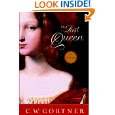
The Original "Getting Real"

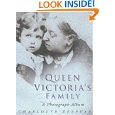
Please click on the picture to order this book.
Sunday, 18 January 2009


Friday, 16 January 2009
Addictions, Angst & Ecstasy

The 'addiction' to angst, I think, is no different than the addiction to ecstasy and awe - in fact they are one and the same. In the wonderful self-indulgence of feeling things to their very depths, the difference between agony, angst and ecstasy is very flimsy. It is interesting that some of the so-called best works of the Romantic poets were induced by opium; the art of some of the great Impressionists came through absinthe or that Branwell Bronte's alluring angst came from his alcohol/laudanum-induced fantasies.
Without for a moment advocating the use of any external substances to create that ecstasy or angst, I wonder which came first in the poets and artists of the past: the drug or the longing in the mind/heart to find expression. I suspect it was the former. The feelings that go right down to the depths of what it is to be human. The thoughts, which have been largely crushed by a world in which everything is explained by a 'rational' mind. We have concreted over forest paths. We have cut down trees, stifled creativity and made everything safe in our attempt to combat disease. But the greatest disease, as I see it, is the stifling of the spirit - of what it really means to be human. To be human means feeling it all; experiencing it all - the agony, the ecstasy, the wonder, the childhood, the passion of being alive. We have made it all clinical and safe. Prior to industrialization, there was no drugs problem. There was no alcoholism on such a large scale. When people listened to the Earth; listened to their own rhythms and didn't feel a need to be conventional, there was no need for that escape. They could think and feel in freedom - to the core. Now, there are addictions because every now and again, people find a glimmer of what used to be an everyday experience and can only recapture it through the use of external substances. Keats understood it - without the need of hemlock or 'some dull opiate' - in his 'Ode to a Nightingale'. The agony, angst and ecstasy is within us all:
My heart aches, and a drowsy numbness pains
My sense, as though of hemlock I had drunk,
Or emptied some dull opiate to the drains
One minute past, and Lethe-wards had sunk:
'Tis not through envy of thy happy lot,
But being too happy in thine happiness, -
That thou, light-winged Dryad of the trees,
In some melodious plot
Of beechen green and shadows numberless,
Singest of summer in full-throated ease.
Monday, 12 January 2009
Angst and Art
Why is it that so many great artists, composers and writers died in poverty and their works were only described as masterpieces after their death? Why is it that so many people adopt the pose of the 'misunderstood genius' to attract attention or explain their failure to succeed? Or worse, why is it that there is something self-aggrandizing and attractive about being the 'misunderstood genius'; and art critics and literary critics, wanting agreement and trying to sound wise, nowadays kowtow to the image so it is turned on its head. The outcast, the failure, the piece of rubbish art, is hailed as genius!
In my youth I used to think there was something heroic about being a failure. What can be more romantic than the notion of suffering for your art? And, truth be told, what can be more self-indulgent or self-aggrandizing? True art, surely, needs no suffering. If art is an expression of Life and Love and of all it is to be alive and to feel deeply, it is, like Anthony de Mello's expression of "a bird doesn't sing because it has a lesson, but because it has a song."
Somewhere, in all of us, I think there is a martyr message - the heroic failure, the poverty-stricken artist for whom the world wasn't ready. And it is balderdash! If you have a song, sing it. If you have something to paint, paint it. If you have a gift, use it! Why should you suffer for it? Oh, that lovely, self-indulgent angst - the chaotic passion of Tchaikovsky; the terrible mutilation of Van Gogh; the madness of the great poet John Clare! We all feel the depths of our inner loneliness solely because we believe we are special and the world doesn't understand. Utter nonsense!
When we feel, feel deeply, feel to the core and go beyond the core of our own angst, there is a well-stream of Oneness. There is joy and real beauty. In my view, the only reason artists, composers and poets died in poverty in garrets is because they believed that poverty was necessary for their art. And yet, the source of art is the same source that created planets, the wastefulness of leaves in autumn, the excesses of Nature. The only real angst is that which we create for ourselves....I think!
In my youth I used to think there was something heroic about being a failure. What can be more romantic than the notion of suffering for your art? And, truth be told, what can be more self-indulgent or self-aggrandizing? True art, surely, needs no suffering. If art is an expression of Life and Love and of all it is to be alive and to feel deeply, it is, like Anthony de Mello's expression of "a bird doesn't sing because it has a lesson, but because it has a song."
Somewhere, in all of us, I think there is a martyr message - the heroic failure, the poverty-stricken artist for whom the world wasn't ready. And it is balderdash! If you have a song, sing it. If you have something to paint, paint it. If you have a gift, use it! Why should you suffer for it? Oh, that lovely, self-indulgent angst - the chaotic passion of Tchaikovsky; the terrible mutilation of Van Gogh; the madness of the great poet John Clare! We all feel the depths of our inner loneliness solely because we believe we are special and the world doesn't understand. Utter nonsense!
When we feel, feel deeply, feel to the core and go beyond the core of our own angst, there is a well-stream of Oneness. There is joy and real beauty. In my view, the only reason artists, composers and poets died in poverty in garrets is because they believed that poverty was necessary for their art. And yet, the source of art is the same source that created planets, the wastefulness of leaves in autumn, the excesses of Nature. The only real angst is that which we create for ourselves....I think!
Sunday, 11 January 2009
The World of the Heart and Imagination
"There are two worlds:" wrote Leigh Hunt, "the world we can measure with line and rule, and the world that we can feel with our hearts and imagination."
History, unfortunately, is dominated by only the sense of the former. That which cannot be measured or proved has so often been denied, mocked or even condemned as foolishness or madness. And where has that brought us to? A world where countries are marked in boundaries and millions have died to protect those boundaries; a world where we see only what is on the surface and seldom look into things to see their real essence; a world where we measure a person's worth by the size of their bank account or what they do for a living.
The world of the heart and imagination has for too long been seen as childish and irrelevant. To some extent, one might say that the masculine thinking of the patriarchal era is the world of rationality; the world of reason and measurement by line and rule. The feminine aspect of all of us (men and women) is that which understands through intuition, through the unseen, through the worlds within worlds...the heart and imagination. The denial of this aspect, and the suppression of dreamers and of women through the ages has led to a great imbalance in Nature.
In the heart and imagination, I believe utterly in the spirits of trees and lakes, in the presence of the Divine in all that exists. Reason tells me to balance this with everyday living, with the need to learn and to study and to go on learning and studying form and measurement - weighing up historical events, weighing up present day ethical and political arguments. One need not deny the other.
Still, there are rational minds that would say it is madness to believe we can communicate with plants and trees and the essence of the One Life in all creation; utter lunacy to believe in fairies or spirits of things. The other evening I watched the final episode of the wonderful BBC dramatisation of Anne Frank's Diary. At the end, as the writing came up to say what had happened to each member of the family, the sheer madness of that mass murder was quite overwhelming.
Which is more insane? To believe in what we know to be true in our hearts and imaginations, or to be rational and make rational arguments for wars and murder? I believe it is truly the time for intuition, for the heart and imagination and all the unseen that we sense in the core of our being to come to the fore. I think we have all had more than enough of that measured, solely 'mental' world, and it is truly the age for hearts to come into their own. We can return to the balance of how Nature is and all we are created to be by reclaiming our own identity and the courage to be free of outworn ideas, fighting other people's wars, following other people's scare-mongering, and simply knowing there is far more to all of us than meets the eye.
History, unfortunately, is dominated by only the sense of the former. That which cannot be measured or proved has so often been denied, mocked or even condemned as foolishness or madness. And where has that brought us to? A world where countries are marked in boundaries and millions have died to protect those boundaries; a world where we see only what is on the surface and seldom look into things to see their real essence; a world where we measure a person's worth by the size of their bank account or what they do for a living.
The world of the heart and imagination has for too long been seen as childish and irrelevant. To some extent, one might say that the masculine thinking of the patriarchal era is the world of rationality; the world of reason and measurement by line and rule. The feminine aspect of all of us (men and women) is that which understands through intuition, through the unseen, through the worlds within worlds...the heart and imagination. The denial of this aspect, and the suppression of dreamers and of women through the ages has led to a great imbalance in Nature.
In the heart and imagination, I believe utterly in the spirits of trees and lakes, in the presence of the Divine in all that exists. Reason tells me to balance this with everyday living, with the need to learn and to study and to go on learning and studying form and measurement - weighing up historical events, weighing up present day ethical and political arguments. One need not deny the other.
Still, there are rational minds that would say it is madness to believe we can communicate with plants and trees and the essence of the One Life in all creation; utter lunacy to believe in fairies or spirits of things. The other evening I watched the final episode of the wonderful BBC dramatisation of Anne Frank's Diary. At the end, as the writing came up to say what had happened to each member of the family, the sheer madness of that mass murder was quite overwhelming.
Which is more insane? To believe in what we know to be true in our hearts and imaginations, or to be rational and make rational arguments for wars and murder? I believe it is truly the time for intuition, for the heart and imagination and all the unseen that we sense in the core of our being to come to the fore. I think we have all had more than enough of that measured, solely 'mental' world, and it is truly the age for hearts to come into their own. We can return to the balance of how Nature is and all we are created to be by reclaiming our own identity and the courage to be free of outworn ideas, fighting other people's wars, following other people's scare-mongering, and simply knowing there is far more to all of us than meets the eye.
Wednesday, 7 January 2009
"La Jeune Martyre"

Walking once through the Louvre, thinking, "I like this, I don't like that..." and how small the Mona Lisa was, I entered a room and saw a painting that literally took my breath away. It was "La Jeune Martyre" by Paul Delaroche. It seemed so huge and so amazing that no reprint or poster (and I have 2 extremely large ones) comes anywhere near to that original moment of seeing it.
I do not know which martyr is represented, or whether it is merely a painting of any martyr. I think it was the contrast in colour and just the sheer beauty of it that really captured me and, in a way, I don't want to know the story behind it as I think it would somehow distract from that initial impact. In Antoine de Saint-Exupery's "Le Petit Prince", the Little Prince gazes longingly at the star from which he came, and considers how bizarre it is that astronomers can name all the stars but do not know them (as he does). Sometimes I think we can learn things so much with our heads, and so little with our hearts that we miss their real value. Not being an artist, and not understanding what makes a piece of work classic, all I know is that I loved that painting and it is enough.
And when you consider that great art critics pays fortunes for pickled fish, people pay to see unmade beds, piles of bricks or lights going on an off, I am not sure that I would ever want to 'learn' more about what is considered a masterpiece.
Saturday, 3 January 2009
The Kindness of Strangers
Rod McKeown's poem, "And Sometimes" is something I am sure most of us empathise with at some point in our lives, and the onset of the January blues adds to the sense of it:
"....The beating of the heart can stifle anything,
Jackhammers and jack-in-the-boxes, anything.
And sometimes the heart beats so fast and so loud
And nobody hears it,
That you find yourself wishing it would stop."
Happily, there is an unexpected ending to the poem...
"And then, someone new moves down the block
And things are different sometimes."
In the post-Christmas, post-New Year months before spring, there is often a sense of gloom around. Anti-climax or just 'more of the same' after the great rush of New Year resolutions. But it's okay. And, whatever the time of year, there are times when, out of the blue, the kindness of strangers reaches right down to the core of our being and lets us know that we're not fighting a losing battle or drifting into oblivion. The kindness of strangers is something that often moves me so deeply it brings tears to my eyes. There are moments when we pass others people like 'ships in the night' and somehow they make a massive difference and we never see them again or have the chance to thank them.
Many years ago, in a feeling of utter despair after a misadventure in France, I arrived penniless in London in the middle of the night and needed to return to Yorkshire. Having already bought a coach ticket (but the coach didn't leave till mid-morning) and having no money for a train ticket, I trudged about and ended up in Victoria Coach Station. It felt safe there because there were people about but around midnight they began to lock the offices and I was cold and very hungry. I went to the offices as they were closing and asked if they knew of safest place for the night. A coach man said, "Only a hotel." I replied, "I have no money." He shrugged and I walked away trudging back to the railway station. Then I heard footsteps behind me and it was the coach man. He said, "I will lose my job if you tell anyone about this, but I wouldn't want my daughter wandering around here at night. You can sleep on a coach. You'll be safe there, and in the morning a man will come on to clean it and I'll tell him you're there." He opened a coach and I slept soundly. In the morning the coach cleaner came and smiled and gave me toast and tea. In the midst of my deepest unhappiness, "someone new moved down the block" and made such a difference. I wanted to write to thank them, but the coach man asked me to say nothing of it, so I never did. It is long enough ago now to say, if he ever reads this, that he really restored my faith in human nature and I wish there were a way to thank him.
Since then, I remember many kindnesses of strangers and I think, when things look gloomy, there are a million angels around us and, to quote George Eliot:
"The golden moments in the stream of life rush past us and we see nothing but sand; the angels come to visit us, and we only know them when they're gone."
"....The beating of the heart can stifle anything,
Jackhammers and jack-in-the-boxes, anything.
And sometimes the heart beats so fast and so loud
And nobody hears it,
That you find yourself wishing it would stop."
Happily, there is an unexpected ending to the poem...
"And then, someone new moves down the block
And things are different sometimes."
In the post-Christmas, post-New Year months before spring, there is often a sense of gloom around. Anti-climax or just 'more of the same' after the great rush of New Year resolutions. But it's okay. And, whatever the time of year, there are times when, out of the blue, the kindness of strangers reaches right down to the core of our being and lets us know that we're not fighting a losing battle or drifting into oblivion. The kindness of strangers is something that often moves me so deeply it brings tears to my eyes. There are moments when we pass others people like 'ships in the night' and somehow they make a massive difference and we never see them again or have the chance to thank them.
Many years ago, in a feeling of utter despair after a misadventure in France, I arrived penniless in London in the middle of the night and needed to return to Yorkshire. Having already bought a coach ticket (but the coach didn't leave till mid-morning) and having no money for a train ticket, I trudged about and ended up in Victoria Coach Station. It felt safe there because there were people about but around midnight they began to lock the offices and I was cold and very hungry. I went to the offices as they were closing and asked if they knew of safest place for the night. A coach man said, "Only a hotel." I replied, "I have no money." He shrugged and I walked away trudging back to the railway station. Then I heard footsteps behind me and it was the coach man. He said, "I will lose my job if you tell anyone about this, but I wouldn't want my daughter wandering around here at night. You can sleep on a coach. You'll be safe there, and in the morning a man will come on to clean it and I'll tell him you're there." He opened a coach and I slept soundly. In the morning the coach cleaner came and smiled and gave me toast and tea. In the midst of my deepest unhappiness, "someone new moved down the block" and made such a difference. I wanted to write to thank them, but the coach man asked me to say nothing of it, so I never did. It is long enough ago now to say, if he ever reads this, that he really restored my faith in human nature and I wish there were a way to thank him.
Since then, I remember many kindnesses of strangers and I think, when things look gloomy, there are a million angels around us and, to quote George Eliot:
"The golden moments in the stream of life rush past us and we see nothing but sand; the angels come to visit us, and we only know them when they're gone."
Thursday, 1 January 2009
The Kingdom of Childhood
How beautiful is the Kingdom of Childhood when, to quote Wordsworth, "trailing clouds of glory do we come..."; when we can turn a single plank of wood into a ship, a castle, a slide or a see-saw; when we find delight in coloured lights or the crinkling of wrapping paper; when stars are magical talismans and a coloured stone found on a beach is taken for a treasure!
How sad it is that the beautiful magic is so quickly squeezed out of us. We are packed into regimented lines and told to hide all we know to be true. Our angels disappear and the magic fades because we are taught to stop believing in it and we grow up and smile fondly - perhaps even enviously - at little children who still understand what we're really about. If only we grew wiser instead of just older - wiser with the wisdom of the heart that returns us more and more to our original 'clouds of glory', the world would be such a happier place.
2009, the commentators tell us, is to be a year of gloom. If we live by economics alone, and believe that our lives are governed by politicians, bankers and one-dimensional thinkers, that might be the case. But there is something much deeper and I can't help thinking that this so-called meltdown of economies is part of a bigger plan - one in which we no longer hand over everything to that 'grown up' mind that obviously fails at every turn. History teaches us that all we ever gained from that is war upon war, power-seeking upon more power-seeking...What about the angels of our childhood? Is it any more ridiculous to put faith in them, than it is to put faith in bankers and would-be political leaders?
Personally, I believe in angels; I believe that coloured stones on beaches are worth as much as diamonds; I believe that stars aren't just the remnants of some explosion in the galaxies. Looking into things, instead of just at them, I believe in the Spirit of the One Life in trees and plants and lakes and all creatures. And I believe that 2009 is a wonderful year for everyone who chooses to believe it is so.
Coventry Patmore's beautiful poem says it all:
My little Son, who look'd from thoughtful eyes
And moved and spoke in quiet grown-up wise,
Having my law the seventh time disobey'd,
I struck him, and dismiss'd
With hard words and unkiss'd,
—His Mother, who was patient, being dead.
Then, fearing lest his grief should hinder sleep,
I visited his bed,
But found him slumbering deep,
With darken'd eyelids, and their lashes yet
From his late sobbing wet.
And I, with moan,
Kissing away his tears, left others of my own;
For, on a table drawn beside his head,
He had put, within his reach,
A box of counters and a red-vein'd stone,
A piece of glass abraded by the beach,
And six or seven shells,
A bottle with bluebells,
And two French copper coins, ranged there with careful art,
To comfort his sad heart.
So when that night I pray'd
To God, I wept, and said:
Ah, when at last we lie with trancèd breath,
Not vexing Thee in death,
And Thou rememberest of what toys
We made our joys,
How weakly understood
Thy great commanded good,
Then, fatherly not less
Than I whom Thou hast moulded from the clay,
Thou'lt leave Thy wrath, and say,
'I will be sorry for their childishness.'
How sad it is that the beautiful magic is so quickly squeezed out of us. We are packed into regimented lines and told to hide all we know to be true. Our angels disappear and the magic fades because we are taught to stop believing in it and we grow up and smile fondly - perhaps even enviously - at little children who still understand what we're really about. If only we grew wiser instead of just older - wiser with the wisdom of the heart that returns us more and more to our original 'clouds of glory', the world would be such a happier place.
2009, the commentators tell us, is to be a year of gloom. If we live by economics alone, and believe that our lives are governed by politicians, bankers and one-dimensional thinkers, that might be the case. But there is something much deeper and I can't help thinking that this so-called meltdown of economies is part of a bigger plan - one in which we no longer hand over everything to that 'grown up' mind that obviously fails at every turn. History teaches us that all we ever gained from that is war upon war, power-seeking upon more power-seeking...What about the angels of our childhood? Is it any more ridiculous to put faith in them, than it is to put faith in bankers and would-be political leaders?
Personally, I believe in angels; I believe that coloured stones on beaches are worth as much as diamonds; I believe that stars aren't just the remnants of some explosion in the galaxies. Looking into things, instead of just at them, I believe in the Spirit of the One Life in trees and plants and lakes and all creatures. And I believe that 2009 is a wonderful year for everyone who chooses to believe it is so.
Coventry Patmore's beautiful poem says it all:
My little Son, who look'd from thoughtful eyes
And moved and spoke in quiet grown-up wise,
Having my law the seventh time disobey'd,
I struck him, and dismiss'd
With hard words and unkiss'd,
—His Mother, who was patient, being dead.
Then, fearing lest his grief should hinder sleep,
I visited his bed,
But found him slumbering deep,
With darken'd eyelids, and their lashes yet
From his late sobbing wet.
And I, with moan,
Kissing away his tears, left others of my own;
For, on a table drawn beside his head,
He had put, within his reach,
A box of counters and a red-vein'd stone,
A piece of glass abraded by the beach,
And six or seven shells,
A bottle with bluebells,
And two French copper coins, ranged there with careful art,
To comfort his sad heart.
So when that night I pray'd
To God, I wept, and said:
Ah, when at last we lie with trancèd breath,
Not vexing Thee in death,
And Thou rememberest of what toys
We made our joys,
How weakly understood
Thy great commanded good,
Then, fatherly not less
Than I whom Thou hast moulded from the clay,
Thou'lt leave Thy wrath, and say,
'I will be sorry for their childishness.'
Subscribe to:
Posts (Atom)